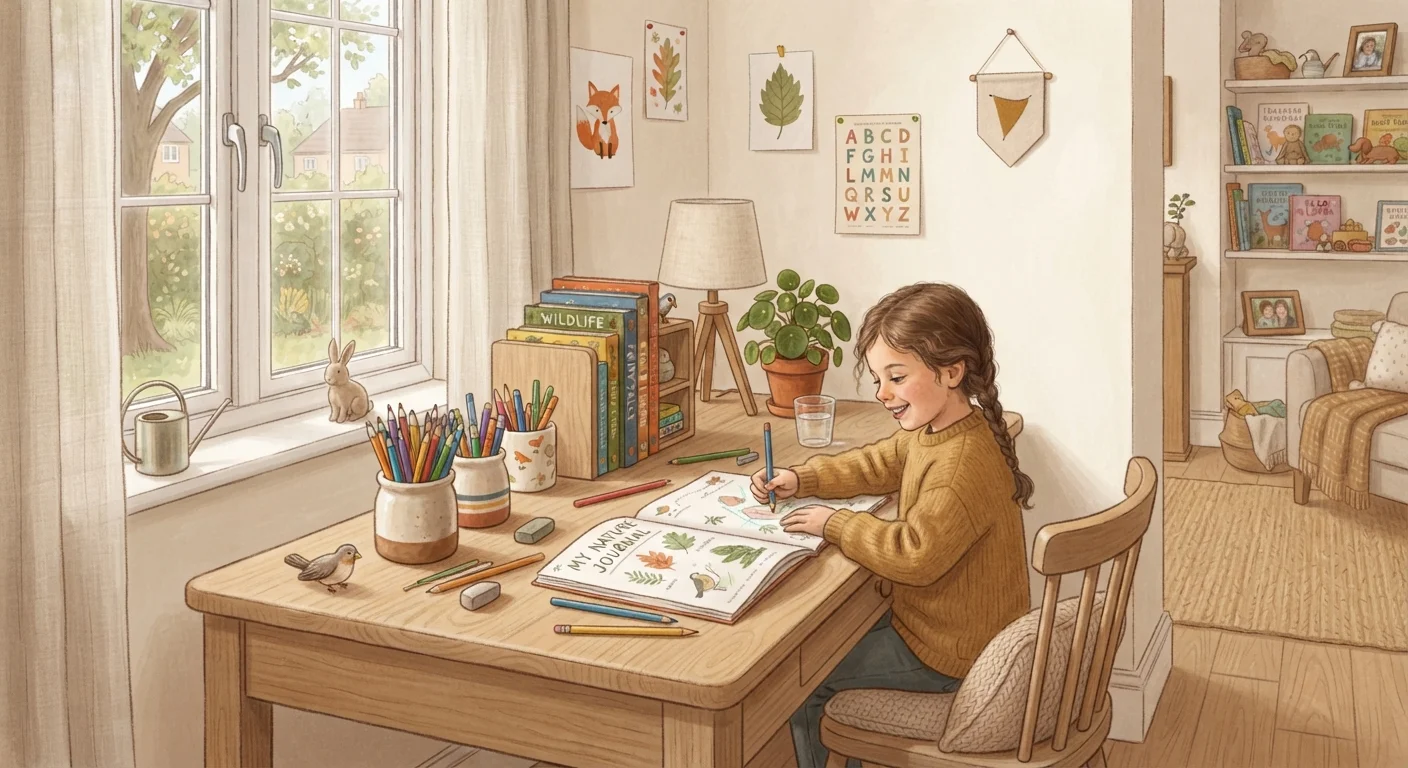

Why Study Habits Matter More Than Study Hours
Many parents focus on how long their child studies rather than how reliably they study. But consistency in timing and structure tends to produce better academic outcomes than marathon sessions crammed in before a test. When children study in predictable, short blocks, information is processed more effectively through a mechanism called spaced repetition - revisiting material across multiple sessions rather than all at once.
Equally important is the relationship between study habits and stress. Children who follow a predictable routine report lower homework-related anxiety, which in turn makes them more willing to engage with difficult material. The goal is not to engineer a perfect study session - it is to make studying feel normal and low-stakes enough that children do it willingly.
If you are weighing how much structure to impose versus allowing your child to direct their own learning, our piece on structured versus child-led learning at home offers a useful framework for finding the right balance.
Routine Beats Willpower Every Time
Habit research consistently shows that reducing the number of decisions a child must make - same time, same place, same starting ritual - dramatically lowers resistance to beginning. Build the structure around the child, not the other way around. Even a two-minute "get settled" ritual (sharpening a pencil, reviewing the task list) can serve as a reliable on-ramp to focused work.
What You Will Need Before You Start
Before walking through the steps, gather a few simple tools and align on expectations within your household. A consistent routine is undermined quickly if one adult enforces study time and another treats it as optional.
What you will need
Physical timer or timer app
Structures study sessions and break intervals so children know exactly when focused work starts and ends.
Notebook or daily task sheet
Used to write down specific tasks before each session, creating a clear and achievable to-do list.
Wall calendar or sticker habit tracker
Provides a visual record of completed study sessions to sustain motivation over weeks.
Desk lamp with adjustable brightness
Ensures adequate, eye-comfortable lighting in the study area, reducing fatigue during longer sessions.
How to Build the Habit Step by Step
The following steps are designed to be introduced gradually over three to four weeks. Do not attempt to implement all of them on day one.
Choose a consistent study time
Pick one daily time slot your child will use for studying every school day. For most children, this is either shortly after school (with a 20-30 minute break first) or after dinner - whichever fits your household rhythm. The key is consistency: the brain begins to associate that time with focused work, which reduces the friction of getting started.
Set up a low-distraction study space
Clear a specific area of clutter, ensure adequate lighting, and agree on a no-screens rule during study time (unless the device is required for schoolwork). Noise levels vary by child - some focus better with soft background sound, others need quiet. Test and adapt. See our guide to setting up a home study space for evidence-based details on how environment affects focus.
Start with a short, manageable session length
Begin with sessions of 15-20 minutes for younger children (ages 6-9) and 25-35 minutes for older ones (ages 10-13). Use a simple timer. When the timer ends, take a genuine break - move around, have a snack. Gradually extend sessions only once the shorter ones feel comfortable and routine. Starting too ambitiously is the most common reason new habits collapse.
Break work into small, named tasks
Before the session begins, write down two or three specific tasks: "Read pages 12-15," "Complete five math problems," "Review spelling words." Vague goals like "do homework" create anxiety and make it hard to know when to stop. Named tasks give a clear endpoint, which makes starting feel less daunting. Crossing items off a list also provides a small but real sense of accomplishment.
Stay nearby without taking over
Research consistently suggests that parental presence - being available in the same room or nearby - supports children's study habits, while doing the work for them undermines independent learning. Check in briefly at the start and end of each session. Ask "How did that go?" rather than reviewing every answer. For more on this, our article on common homework-time mistakes parents make explores what the evidence actually recommends.
Track the streak and reset without shame
Use a simple wall calendar or habit tracker where your child places a sticker or checkmark for each completed session. Visual streaks build motivation. When a day is missed - and it will be - treat it neutrally: "Tomorrow we start again." Shame and disappointment make children avoid the activity rather than return to it. Missing one day does not break a habit; making a big deal of it often does.
Avoid Overloading the First Few Weeks
Parents often try to overhaul study habits all at once - new schedule, new space, new rules - and the whole system collapses under its own weight. Introduce one change at a time. Get the timing right before worrying about the environment; get the environment right before introducing task lists. Layering changes incrementally is far more likely to produce a lasting routine.
What to Do When the Routine Falls Apart
Every study routine hits bumps - school breaks, illness, stressful periods at home. The most important thing is to re-establish the habit quickly and without drama. Return to the last version of the routine that was working, rather than rebuilding from scratch.
If a child is consistently resistant to study time, it is worth exploring whether the sessions are too long, the material is too difficult, or the environment is genuinely not working. Sometimes resistance signals a learning difficulty rather than a motivation problem. Our article on supporting a child who struggles with reading is a useful starting point if reading-related avoidance is a pattern.
Habits Take Longer Than You Think
Popular advice often cites "21 days" to form a habit, but behavioral research suggests the actual range is closer to 66 days - and varies widely by person and task complexity. Set realistic expectations with your child: the goal for the first month is simply to show up consistently, not to see dramatic academic results. Patience at the start pays off in stability later.
Finally, remember that studying is not the only way children learn. Everyday activities build real academic skills too - and keeping that perspective helps parents avoid over-relying on desk time as the only measure of learning progress.