Why the Physical Environment Matters
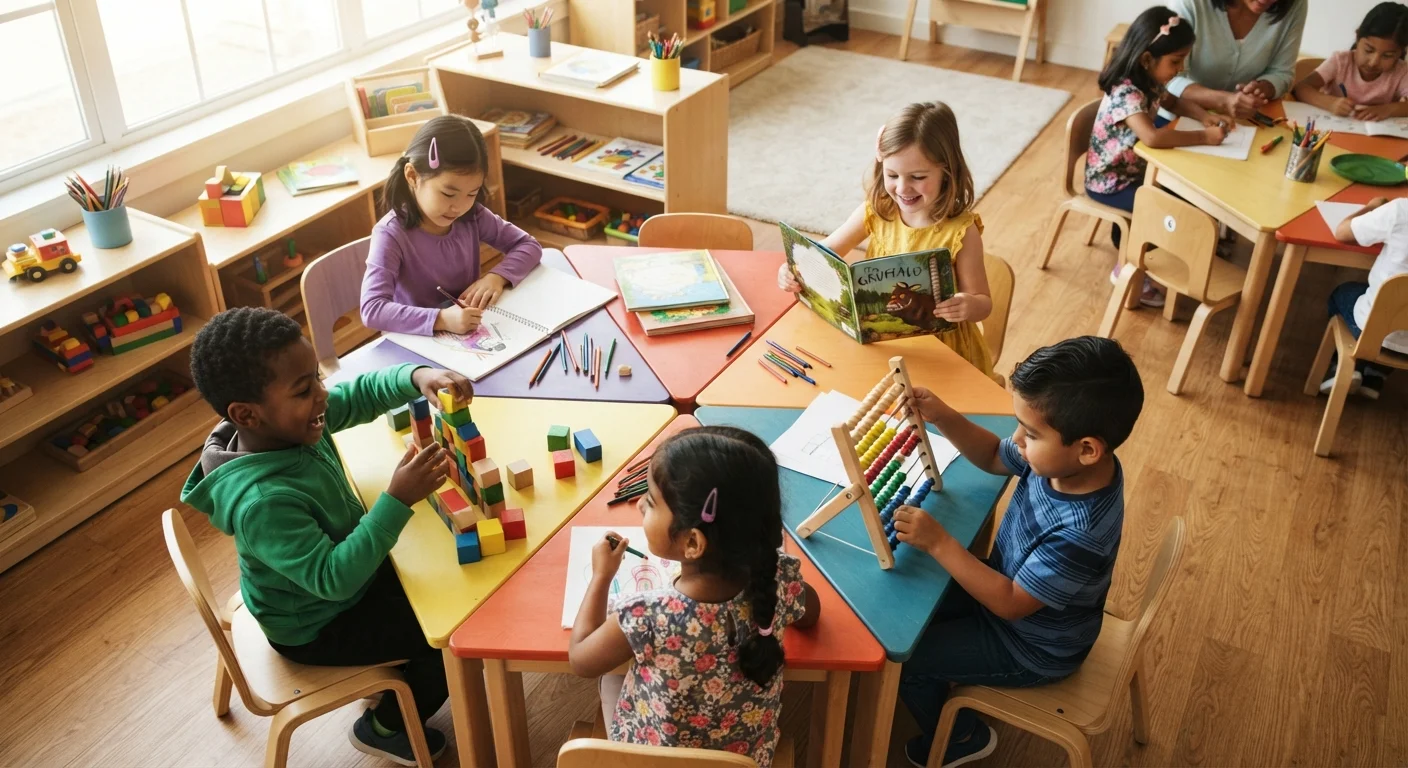
Most parents focus on what children are learning - the curriculum, the homework, the reading list. But a growing body of educational research suggests that where children learn matters too. Environmental factors like lighting, noise levels, and spatial organization influence cognitive load (the mental effort required to process information) and directly affect how well children absorb and retain what they study.
This doesn't mean you need a dedicated classroom. It means making thoughtful, evidence-informed choices about the spaces children use to learn. The good news: even modest adjustments can produce real differences in focus and output. See also our guide on why children learn differently for context on how individual factors shape these environmental needs.
Evidence-Backed Practices for a Better Home Learning Space
The following practices are grounded in educational psychology research and practical classroom design principles, adapted for home settings.
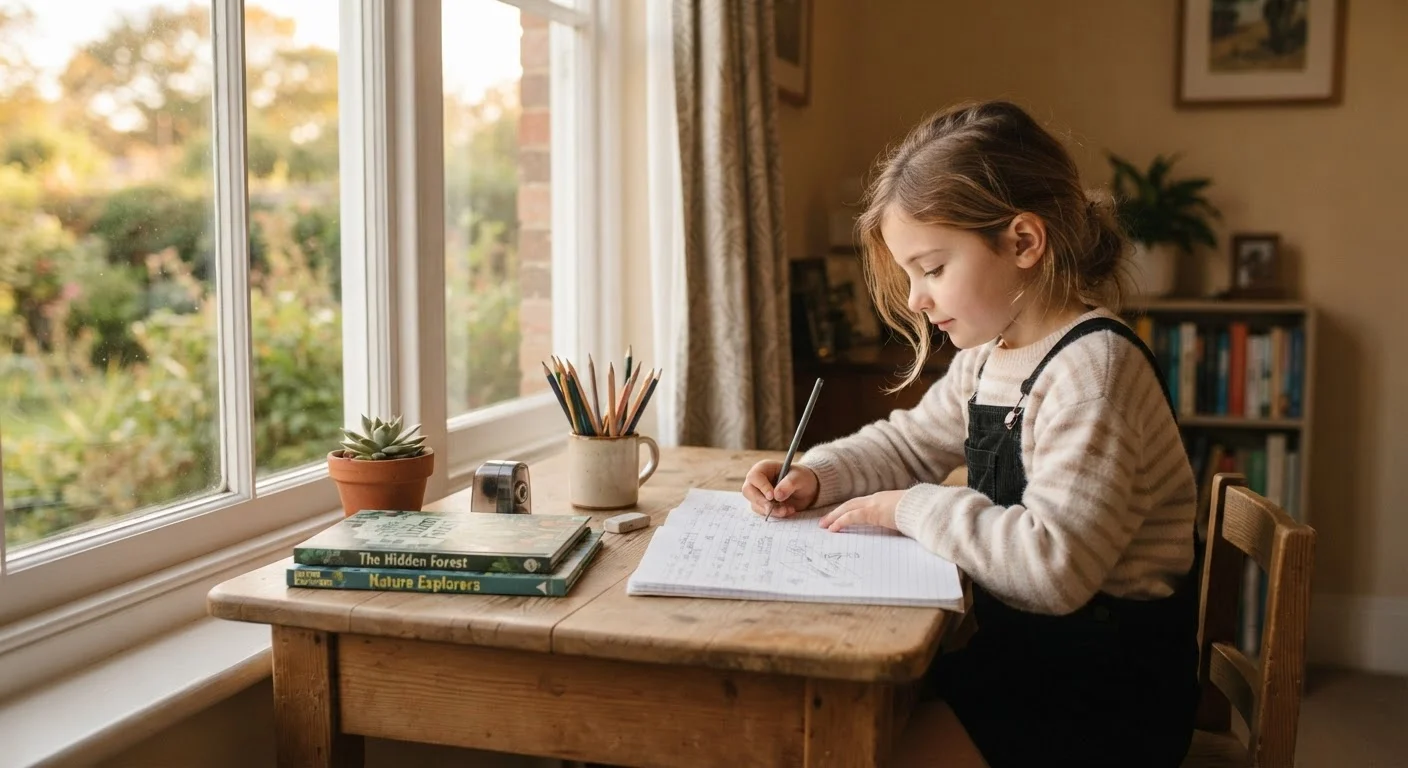
Prioritize natural light - or warm-toned, diffuse artificial lighting.
Exposure to natural light has been linked in multiple studies to improved alertness and mood in learners. When natural light isn't available, warmer, diffuse artificial lighting causes less eye strain than harsh fluorescent bulbs, helping children sustain attention for longer periods.
Designate a specific, consistent spot for learning.
Cognitive psychology research supports the idea that our brains associate physical spaces with particular behaviors. A dedicated study spot helps children mentally transition into a learning mode more reliably than shifting between the dining table, sofa, and bed.
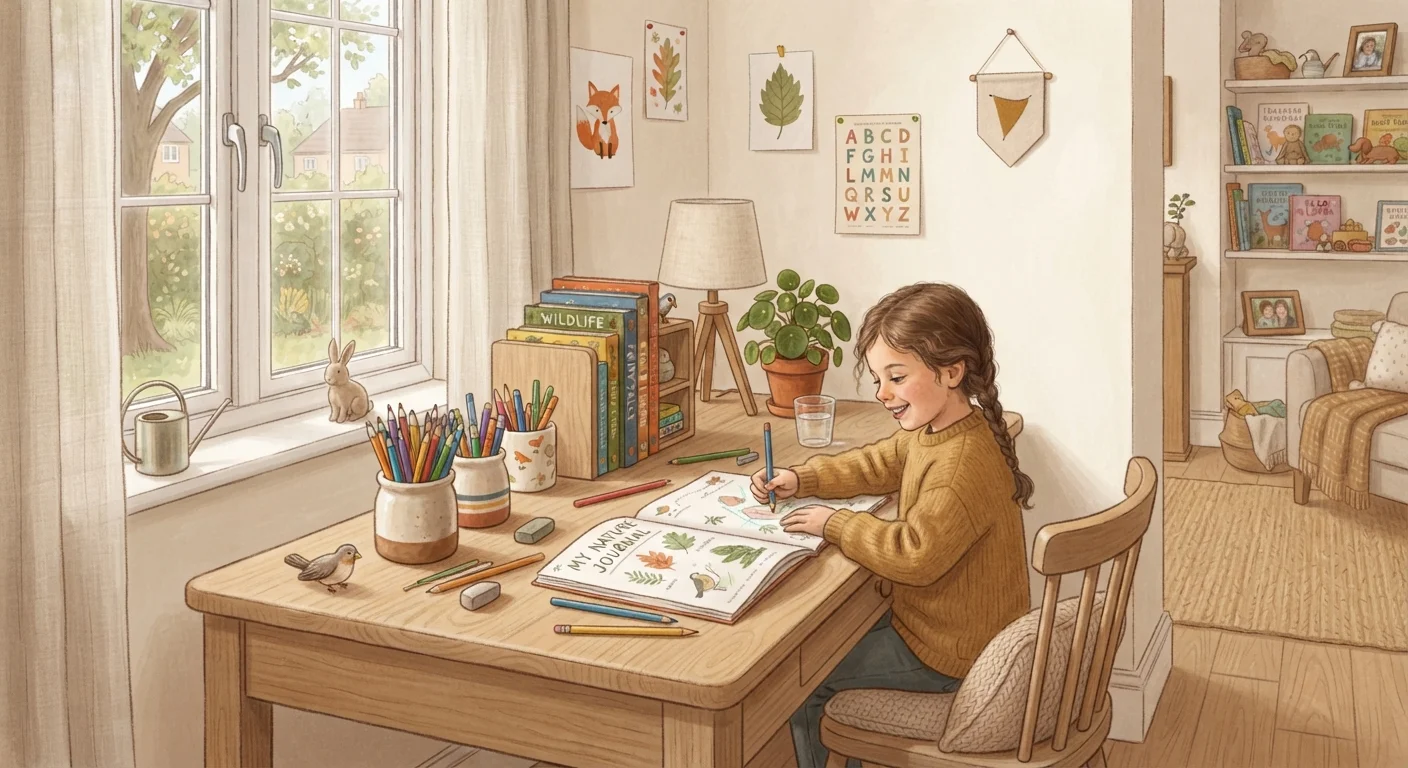
Reduce visual clutter within the child's line of sight.
Studies on visual distraction in learning environments suggest that extraneous objects in the visual field increase cognitive load, leaving less mental capacity for the actual task. A cleaner workspace correlates with fewer attention interruptions.
Manage background noise deliberately.
Unpredictable, fluctuating noise - such as a TV in another room or nearby conversations - is more disruptive to children's reading comprehension and recall than consistent low-level ambient sound. The type and variability of noise matters as much as the volume.
Involve the child in setting up and organizing their space.
Research on intrinsic motivation in learning suggests that children who feel a sense of agency over their environment are more engaged with it. Giving children age-appropriate choices in how their study area looks and functions increases buy-in.
Ensure materials and supplies are organized and accessible before each session.
Time spent searching for a pencil, textbook, or charger at the start of a study session disrupts the transition into focused work and provides an easy off-ramp for procrastination. Preparation reduces friction.
Building Routine Around the Space
A well-designed space is only part of the picture. How and when it's used matters just as much. Research on habit formation consistently shows that pairing a location with a specific, repeated activity strengthens the mental association over time - meaning children who study in the same spot at the same time each day are more likely to enter a focused state quickly.
Pair Time and Place for Stronger Habits
The combination of a consistent location and a fixed time is more powerful than either factor alone. If possible, start the study session with a brief, repeatable cue - such as clearing the desk and setting a timer - to signal to the child's brain that focused work is beginning. Over time, this cue alone can trigger a readiness to focus. For structured approaches to scheduling, our guide on building a personal study routine offers useful frameworks applicable across age groups.
Predictability also reduces negotiation and resistance. When study time is embedded into a daily structure rather than decided each afternoon, it becomes less of a battle. Our article on building a study habit that actually sticks walks through practical steps for making this work at different ages. You might also explore where parents go wrong at homework time for insight on common pitfalls to avoid.
Start Small: Quick Wins for Any Home
Redesigning a study space doesn't have to be a large project. Many of the most effective changes are low-cost and immediate. Below are actions you can take today, ranked by likely impact.
For families navigating screen use during study time, our piece on screen time and learning separates the evidence from the hype - useful context when deciding how devices fit into your child's study setup.