
The Promise vs. the Reality
Loyalty programmes are everywhere — grocery chains, airlines, pharmacies, coffee shops, and online retailers all dangle points, cashback, or exclusive pricing in exchange for your continued business. The pitch is simple: spend where you already shop, earn rewards, repeat. And to be fair, for disciplined participants, that pitch isn't entirely hollow.
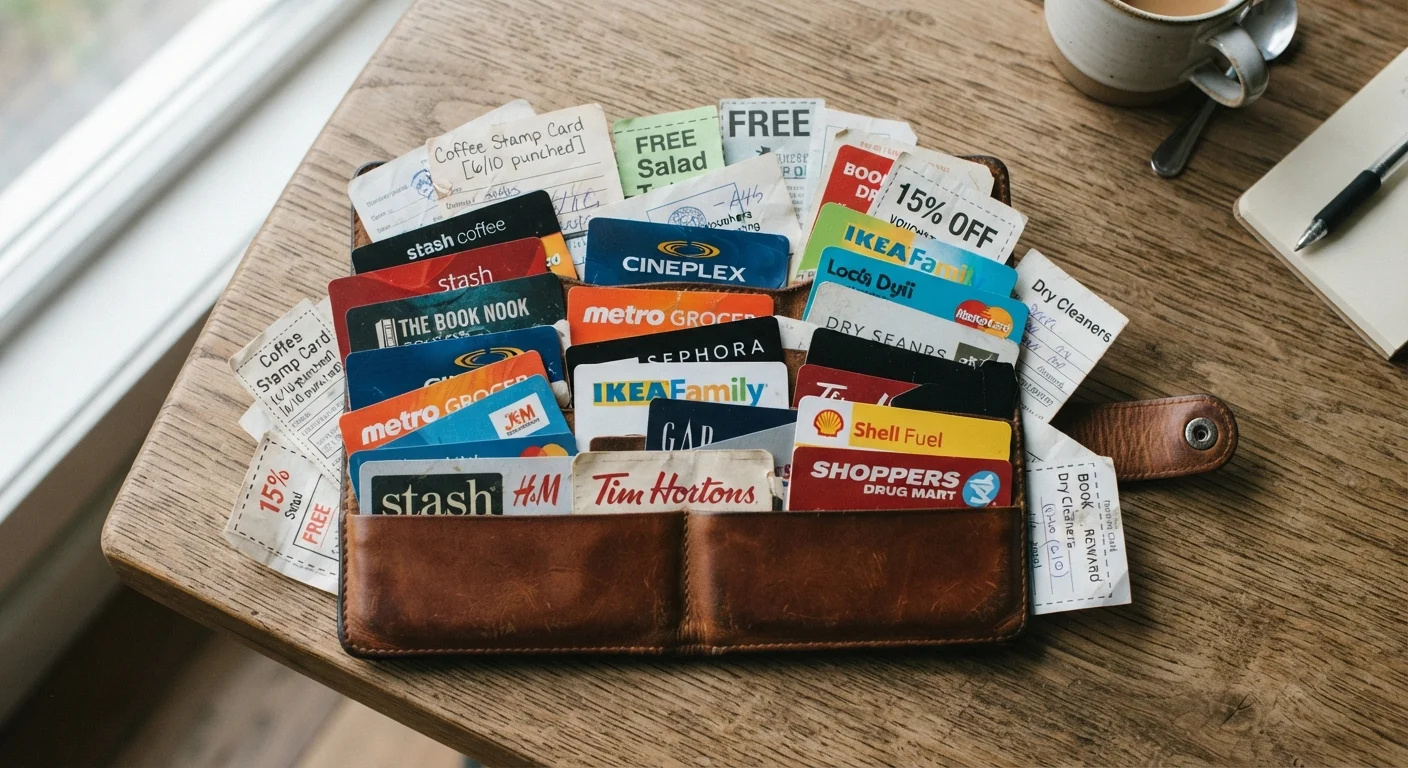
But the average American household is enrolled in roughly 15 loyalty programmes while actively using fewer than half of them, according to data from Loyalty One's consumer research. That gap between membership and meaningful use is where the real story lives. Understanding what these schemes actually deliver — and what they quietly extract — is the first step to deciding whether any given programme is worth your time.
If you've ever wondered whether the price tag you see at checkout reflects what you'd actually pay elsewhere, it's worth reading how loyalty card fine print can quietly inflate costs — see our look at hidden costs most grocery shoppers miss.
The Genuine Advantages
Loyalty programmes aren't without merit. When structured well and used intentionally, they can meaningfully reduce costs on things you'd buy anyway.
Earn value on purchases you'd make anyway
When a programme aligns with your regular spending — groceries, fuel, or a preferred airline — rewards accumulate without changing your behaviour. That's genuinely free value, not a nudge to overspend.
Member-only pricing can reduce everyday costs
Many grocery and pharmacy programmes offer lower shelf prices exclusively to members. If those prices apply to staples you already buy, the savings are real and repeatable.
Travel perks can hold significant dollar value
Complimentary checked bags, lounge access, or elite status upgrades can be worth hundreds of dollars annually for travellers who fly regularly on a single carrier.
Centralised purchase history simplifies budgeting
Some programmes provide spending summaries or receipts that make it easier to track category spending — a minor but practical administrative benefit.
Tiered programmes — particularly in travel and hospitality — can also provide real lifestyle benefits like priority boarding, free checked bags, or room upgrades. For frequent travellers, those perks carry tangible dollar value. Our guide to how loyalty programmes work for occasional travellers breaks down where the genuine value sits without the hype.
The Trade-offs You Should Know
Every loyalty scheme involves a transaction that goes beyond points and purchases. Here's what the sign-up screen rarely highlights.
Your data is the real currency
Loyalty schemes are, at their core, data-collection tools. Purchase history, location patterns, and personal identifiers are routinely shared with third-party marketing partners — a trade most members accept without reading the privacy policy.
Points devalue or expire with little notice
Programmes can and do reduce the value of outstanding points, change redemption thresholds, or expire balances after inactivity periods. Accumulated rewards are not a guaranteed asset.
Membership nudges spending in the programme's favour
Research in consumer behaviour consistently shows that enrolled members concentrate purchases within a programme to reach tier thresholds — sometimes paying more overall than they would by shopping around.
High-value rewards are concentrated at higher tiers
The benefits that attract most people — free flights, elite status, meaningful cashback — typically require spending levels that only a fraction of members reach in practice.
Redemption restrictions limit practical value
Blackout dates, category limits, minimum redemption thresholds, and partner-only rules can make it difficult to use what you've earned in the way you expected.
The 'Member Price' Illusion
Some retailers set their non-member shelf price above competitors' standard rates, then position the loyalty price as a discount against that inflated baseline. The result looks like a saving but may simply be a normalised price dressed up as a reward. Checking a unit price against one or two alternatives takes less than a minute and can reveal whether the 'deal' is real.
Before assuming a loyalty price is a deal, check the baseline. Retailers sometimes set the non-member price higher than competitors' standard shelf price, making the "member discount" an optical illusion rather than a genuine saving.
Making an Honest Assessment for Your Situation
The right question isn't whether loyalty programmes are good or bad — it's whether a specific programme works for your actual spending patterns. A few practical ways to evaluate:
- Estimate your realistic annual reward. Most programmes publish earning rates. Calculate what you'd actually accrue in 12 months based on your current spending, then compare it to any annual fee or data trade-off.
- Check expiry and redemption rules before earning. Points that vanish after 12 months of inactivity have zero value if your spending is seasonal.
- Audit your current memberships. If you're enrolled in programmes you haven't touched in a year, cancel or consolidate. Dormant accounts still hold your data.
~15
Average loyalty programme memberships per US household
Consumer research from Loyalty One found that while households hold roughly 15 memberships on average, fewer than half are actively used.
Over $100B
Estimated unredeemed loyalty points value in the US
Industry analysts have estimated that the total value of unredeemed loyalty currency held by US consumers runs into the hundreds of billions of dollars — value that often reverts to the issuer.
It's also worth understanding how different reward structures compare to one another. Our breakdown of cashback, points, and miles can help you identify which model best suits your spending habits. And if you're sceptical of travel-specific reward claims, common myths about travel rewards programmes separates the facts from the marketing.
This article is for general informational purposes only and does not constitute personalised financial advice. Consider consulting a qualified financial professional for guidance specific to your situation.