
What a Savings Account Actually Does
A savings account is a deposit account held at a bank or credit union that pays you interest in exchange for keeping your money there. Unlike a checking account, which is built for frequent transactions, a savings account is designed to hold funds you don't need immediate access to — while still keeping them safe and accessible.
The bank uses your deposited funds as part of its lending pool. In return, it pays you interest at a rate expressed as an APY. Accounts at federally insured institutions are covered by the FDIC (for banks) or NCUA (for credit unions) up to applicable limits, meaning your principal is protected even if the institution fails. This is general financial information — for decisions specific to your situation, consult a licensed financial professional.
Breaking Down APY
APY stands for Annual Percentage Yield. It represents how much your money will grow over a full year, expressed as a percentage, and it already accounts for compounding. This makes APY the most straightforward number to use when comparing accounts side by side.
For example, an account with a 4.50% APY will turn a $1,000 deposit into roughly $1,045 after one year — assuming no withdrawals and interest compounded daily. A second account offering a nominally similar rate but compounding monthly may yield slightly less, even though the difference feels invisible in the short run.
4.50%+
APY available at many online savings accounts
As of mid-2024, numerous FDIC-insured online banks were offering high-yield savings rates well above the national average, according to published rate data from the FDIC and financial comparison resources.
0.46%
National average savings account APY
The FDIC reported the national average savings account interest rate at approximately 0.46% in mid-2024, highlighting the significant gap between typical and high-yield options available to consumers.
Daily
Most common compounding frequency at top-rate accounts
High-yield savings accounts offered by online banks most commonly compound interest daily, which produces slightly more growth than monthly compounding at the same stated rate.
When evaluating a savings account, the APY listed in disclosures is the number that matters most for growth. The raw interest rate alone, sometimes called the nominal rate, doesn't capture the compounding benefit and can be misleading if used for comparisons.
How Compound Interest Builds Over Time
Compound interest is interest calculated on your running balance — not just your original deposit. Each time interest is applied (daily, monthly, or quarterly), it becomes part of your balance, and the next interest calculation is based on that larger number. This feedback loop is what makes compounding so powerful over time.
Consider a simple illustration: $5,000 deposited at a 4% APY, compounded monthly, with no additional contributions. After five years, that balance grows to roughly $6,100 — about $1,100 in earned interest. Add consistent monthly contributions and the effect multiplies further. The math isn't magic; it's patience working in your favor.
Let Compounding Work Uninterrupted
Frequent withdrawals from a savings account reset the compounding base, slowing long-term growth. Treat your savings account balance as off-limits except for its stated purpose — whether that's an emergency fund or a specific goal. Even transferring out small amounts regularly can meaningfully reduce the compounding effect over a one- to three-year horizon.
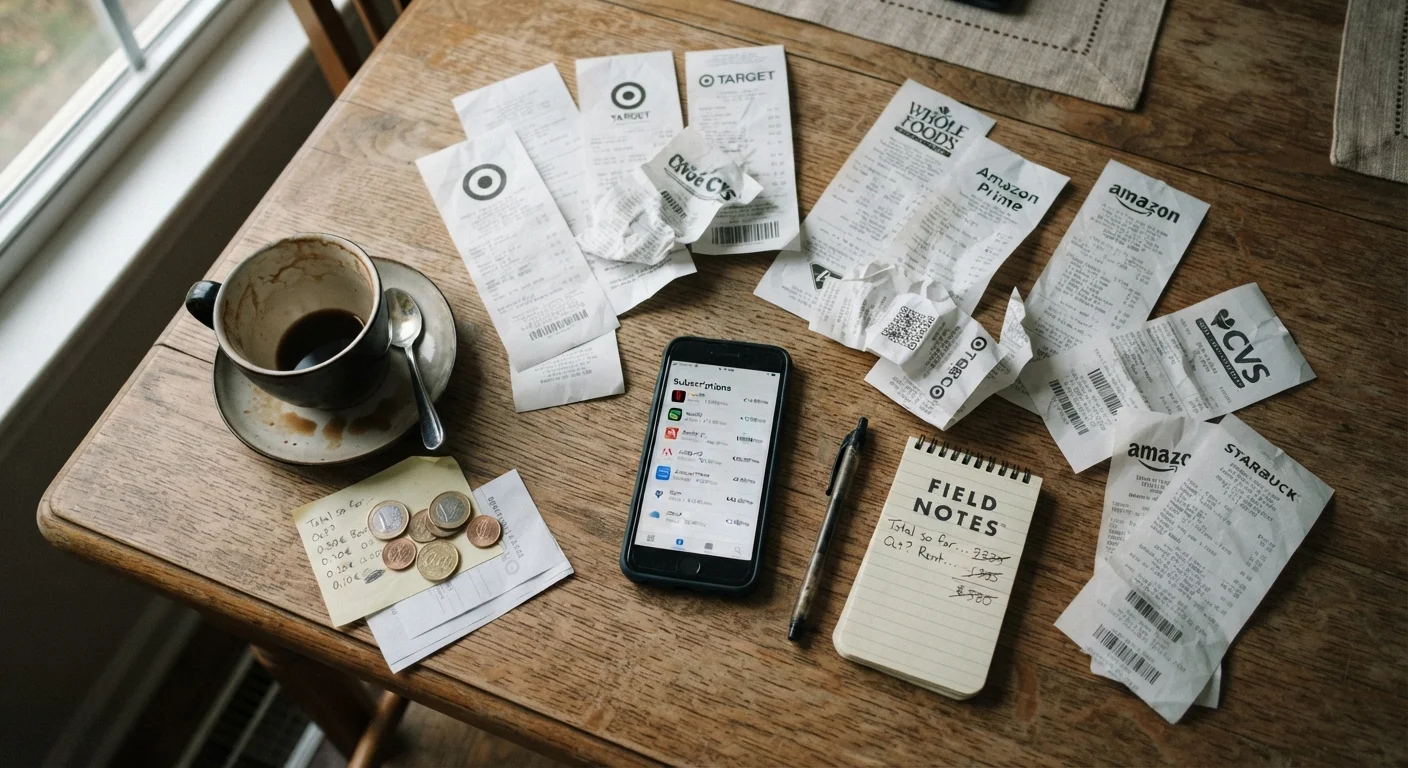
It's also worth keeping in mind what can quietly work against this growth. Routine spending habits that redirect cash away from savings can significantly slow the compounding effect — even small amounts withdrawn or redirected reduce the base on which future interest is calculated.
Putting It to Practical Use
Understanding APY and compounding changes how you approach saving — not as a passive habit, but as a deliberate strategy. Keeping funds in an account with a meaningfully higher APY, leaving interest to compound without withdrawals, and adding to the balance regularly are the three levers that accelerate growth.
One structured approach that works well with a savings account is a sinking fund — a dedicated pot for a specific future expense like a car repair or vacation. Setting up a sinking fund inside a high-yield savings account lets compounding work in your favor while keeping those funds clearly earmarked and separated from your everyday spending.
The broader principle: every dollar sitting in a low-yield account instead of a higher-yield one represents an opportunity cost. You don't need to be a financial expert to act on this — you just need to understand what the numbers mean and compare them honestly.
This article is for general informational and educational purposes only and does not constitute personalized financial or tax advice. Consult a qualified financial professional for guidance specific to your circumstances.