What Maths Anxiety Actually Looks Like
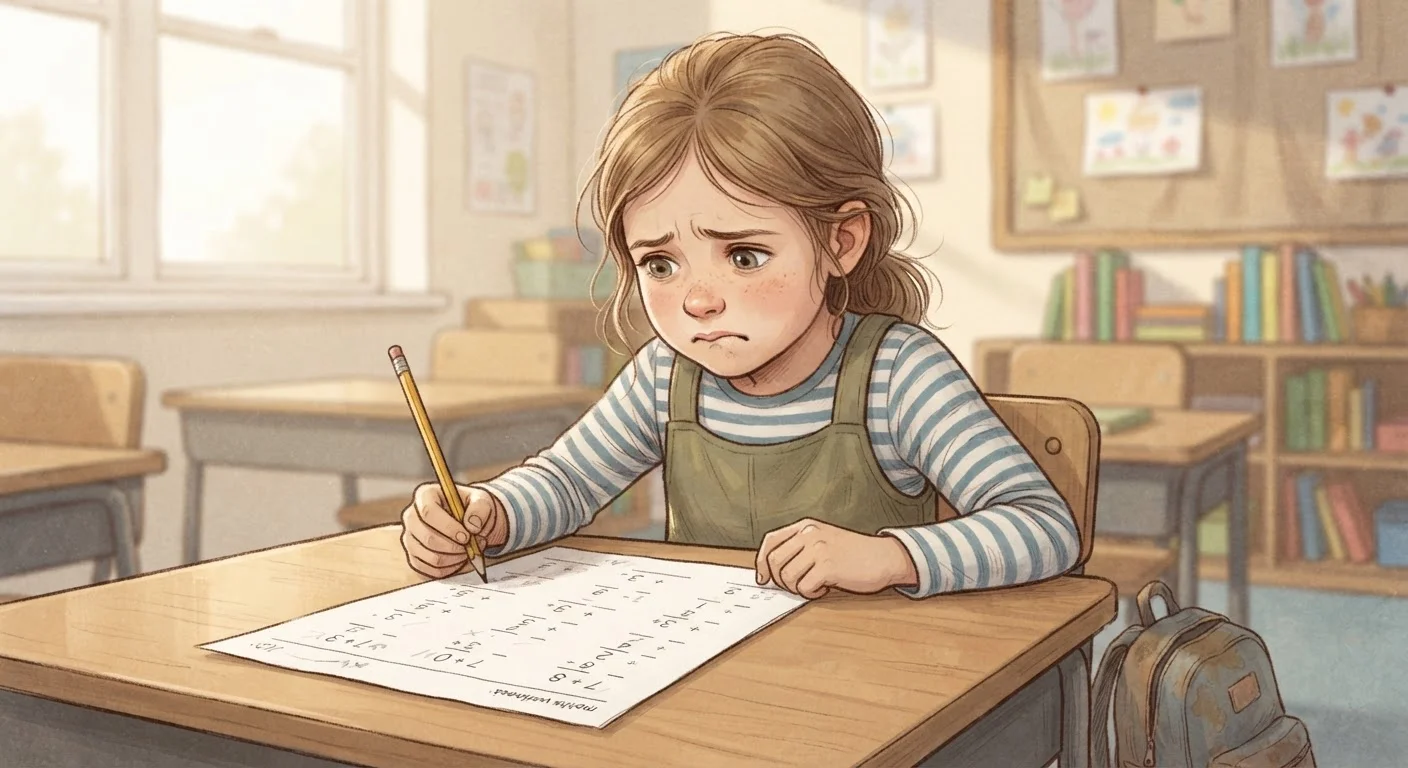
Maths anxiety goes beyond not liking a subject. It is a stress response - one that activates when a child expects difficulty, judgment, or failure around numbers. In the classroom, it may look like a child who freezes during a test, refuses to answer aloud, or shuts down when faced with a word problem. At home, it often shows up as procrastination, tears over homework, or persistent claims of being "bad at maths."
Physical symptoms are also common. Some children report stomachaches, headaches, or a racing heart in anticipation of maths activities. These are genuine stress responses, not excuses. Understanding this distinction is important: the child is not being difficult - their nervous system is reacting to perceived threat.
Maths anxiety also tends to compound over time. When a child avoids maths to escape discomfort, they miss practice opportunities, which creates genuine gaps in knowledge, which in turn reinforces the belief that they cannot do maths. This cycle, if uninterrupted, can persist into adulthood. Because children learn and process experiences in deeply individual ways, it helps to understand the wider picture - see why children learn differently for broader context on learning variation.
What Causes Maths Anxiety in Children
No single factor causes maths anxiety. Research points to a combination of environmental, social, and instructional contributors.
- High-pressure classroom experiences: Timed drills, public performance expectations, and competitive ranking create conditions where mistakes feel costly. For anxious children, this raises the emotional stakes of every numerical task.
- Adult attitudes: When parents or teachers express that maths is hard, that they were never good at it, or that some people simply lack a "maths brain," children often internalise these messages. Casual statements carry real weight.
- Early negative experiences: A humiliating moment in class, a series of poor grades without adequate support, or a teaching style that did not match the child's learning pace can all plant seeds of anxiety early.
- Fixed mindset framing: Children taught to see ability as fixed - rather than something that grows with effort - are more likely to interpret struggle as evidence of permanent limitation.
~25%
Children affected by significant maths anxiety
Research cited in educational psychology literature suggests roughly one in four students experience maths anxiety at a level that affects their performance.
Age 6-7
Earliest age maths anxiety reliably appears
Studies published in peer-reviewed journals have documented measurable maths anxiety in children as young as first grade.
2x
Working memory reduction under timed test conditions
Some research indicates that anxiety can roughly halve the effective working memory capacity available during a maths task, directly impairing recall.
Notably, maths anxiety is not correlated with low IQ or general academic underperformance. High-achieving students can and do experience it, particularly in environments that emphasise speed and correctness above understanding.
How Adults Can Help Reduce Maths Anxiety
The good news is that maths anxiety responds well to targeted, consistent support from trusted adults. These approaches are grounded in what educational research suggests works.
Shift the language around maths
Replace "I was never good at maths either" with "This feels tricky - let's figure it out together." Model a growth mindset by treating difficulty as expected rather than alarming. Avoid framing maths performance as a fixed trait.
Reduce performative pressure
At home, prioritise low-stakes practice over timed drills. Celebrate effort, process, and reasoning - not just correct answers. Encourage children to explain their thinking aloud, which builds confidence and reveals where gaps actually lie.
Connect maths to everyday life
Abstract numbers become less threatening when they appear in familiar contexts. Cooking, shopping, measuring furniture, and estimating journey times all involve genuine mathematical thinking. Everyday activities that teach real skills offers practical ideas for weaving numeracy into daily routines naturally.
Communicate with teachers
Parents who notice signs of anxiety at home should share observations with the child's teacher. A coordinated response - where school and home use consistent, supportive language - is more effective than either working in isolation.
Try Talking Through Mistakes Openly
When a child makes an error, resist the urge to simply correct it. Instead, ask: 'What were you thinking here?' This approach normalises imperfection, builds metacognitive skills, and sends a clear message that mistakes are part of learning - not evidence of failure.
For children whose anxiety is persistent or severe, a school counselor or educational psychologist can provide more structured intervention. Early support matters: the longer anxiety goes unaddressed, the more entrenched the avoidance behaviour tends to become.
This article is for general informational and educational purposes only. If you have concerns about your child's wellbeing or learning, consult a qualified educational or mental health professional.