
What Each Pathway Actually Involves
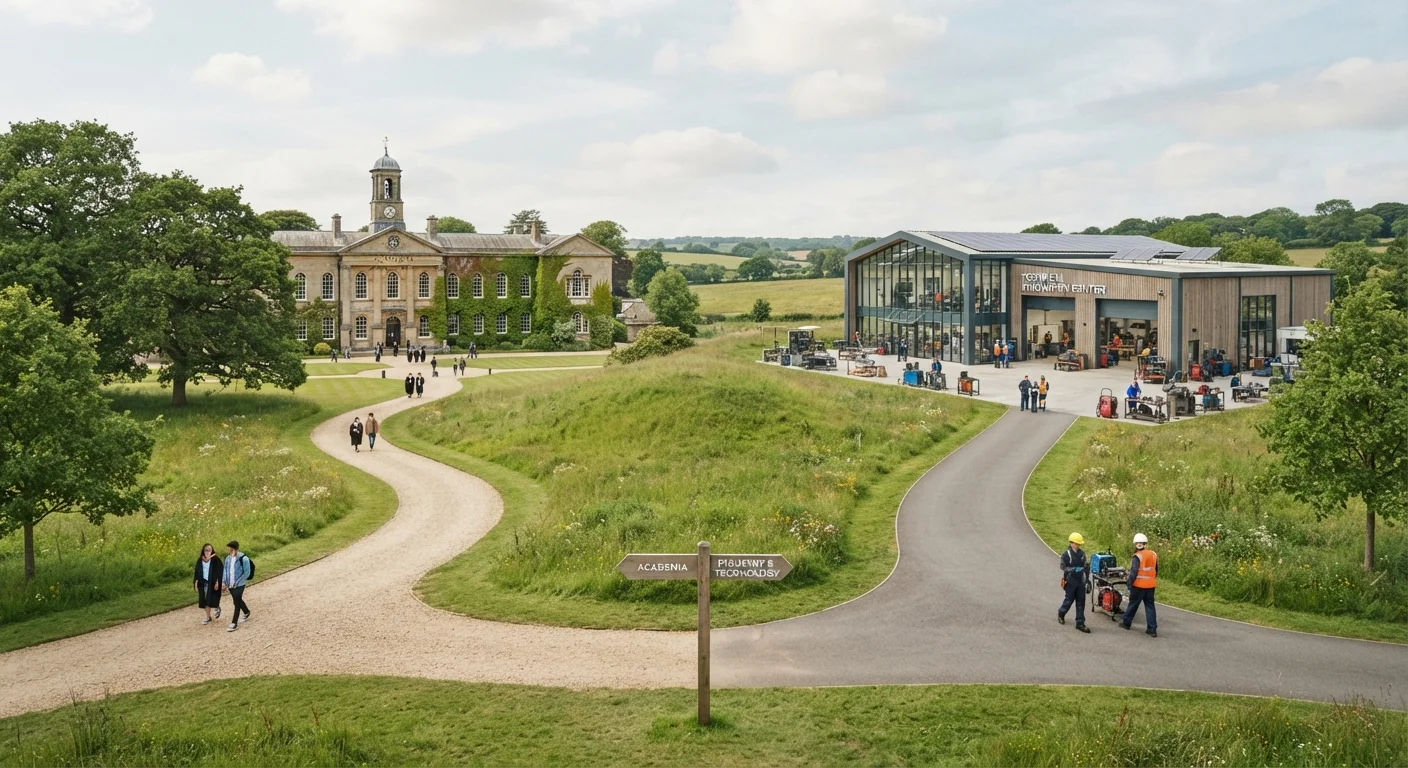
Vocational training - sometimes called career and technical education (CTE) - prepares learners for specific skilled occupations through focused, hands-on instruction. Programs are typically offered by community colleges, trade schools, and apprenticeship programs, and they lead to certificates, diplomas, or associate degrees in fields such as plumbing, dental hygiene, welding, automotive technology, and medical coding.
Traditional four-year degrees, offered by colleges and universities, combine major-specific coursework with general education requirements across humanities, sciences, and social studies. They culminate in a bachelor's degree and are designed to develop critical thinking, communication, and analytical skills alongside discipline-specific knowledge. Some careers - including law, medicine, engineering, and teaching - require this credential or a graduate-level degree built on top of it.
Understanding these structural differences is the starting point for any honest comparison. For a broader look at how different learning formats align with specific goals, see how learning formats match different goals.
Duration, Cost, and Time to Employment
One of the clearest distinctions between these paths is time. Vocational programs commonly run between six months and two years, allowing graduates to enter the workforce relatively quickly. A four-year bachelor's degree requires, on average, four to five years of full-time study before a graduate is credentialed.
Cost differences are also significant. According to the National Center for Education Statistics, the average annual tuition and fees at public two-year institutions - which host many vocational programs - is substantially lower than at four-year public or private universities. However, cost-effectiveness is not straightforward: higher average lifetime earnings associated with bachelor's degrees can, in certain fields, offset greater initial tuition costs over a career. This is not a guaranteed outcome and varies considerably by occupation, employer, and region.
~$3,900/yr
Avg. tuition at public two-year colleges
According to the National Center for Education Statistics, average in-district tuition and fees at public two-year colleges is substantially below four-year institution costs.
2x
Typical length difference between paths
Most vocational programs complete in one to two years, while bachelor's degrees require four or more years on average, according to program structures across U.S. institutions.
Time to employment is where vocational programs hold a clear structural advantage. A welding certificate or HVAC technician credential can lead directly to a paying position within a year or two of starting, whereas a degree graduate may spend additional time in job searching or early-career roles before income stabilizes.
Industry Fit: Where Each Path Tends to Lead
Certain industries are structured around vocational credentials by design. Construction trades, healthcare support roles (such as medical assistants and phlebotomists), cosmetology, culinary arts, IT certifications, and automotive repair are among the fields where employers regularly hire based on demonstrated technical competency rather than a bachelor's degree.
By contrast, fields such as accounting, education, nursing (at the registered nurse level and above), computer science, psychology, business management, and most STEM research roles typically require or strongly prefer a four-year degree. Graduate-level credentials - law, medicine, architecture - require bachelor's degrees as a prerequisite.
It is worth noting that the lines are not always fixed. Some employers in technology and business have broadened hiring criteria to recognize demonstrated skills alongside or instead of degrees. Learners interested in exploring how digital credentials and online learning fit into these shifting norms can find useful perspective in the trade-offs of online education.
| Vocational Training | Traditional Degree | |
|---|---|---|
| Typical Duration | 6 months - 2 years | 4 - 5 years |
| Average Tuition Cost | Generally lower | Generally higher |
| Time to Employment | Faster entry to specific roles | Longer path, broader options |
| Career Flexibility | Occupation-specific | Broader industry transferability |
| Industries Served | Trades, healthcare support, tech | Business, STEM, education, law |
| Graduate Study Eligibility | Limited without further credits | Prerequisite for most programs |
Career Flexibility and Long-Term Pathways
A traditional degree's broader curriculum tends to produce credentials that transfer across industries more readily. A graduate with a degree in communications, for example, may move into marketing, public relations, nonprofit management, or media over a career - fields that share common skill demands even if they differ in setting.
Vocational credentials are more occupationally specific. That specificity is a strength for those committed to a trade but can become a constraint if career interests shift. However, many vocational graduates do pursue further education over time. Community college articulation agreements - formal partnerships between two-year and four-year institutions - allow some vocational associate degree holders to transfer credits toward a bachelor's degree, extending their options without starting from scratch.
Those still weighing broader education timing decisions may also find value in reviewing the trade-offs of taking a gap year before committing to either path, particularly if personal readiness or financial planning are factors.
This article is for general informational and educational purposes only. Readers are encouraged to research specific programs, consult with academic advisors, and review labor market data relevant to their region and field of interest before making educational or financial decisions.