Why Your Exercise Format Matters More Than You Think
When most people hit a wall with their workout routine, they assume the problem is willpower. But exercise science consistently points to something more nuanced: the structure of how you work out shapes whether you keep doing it. Group fitness and solo training are fundamentally different experiences - not just socially, but psychologically and practically.
Understanding the real trade-offs can help you design a routine that fits your actual life, rather than an idealized version of it. For a deeper look at why so many routines stall in the first place, see why people quit new exercise habits and what evidence-informed strategies actually help.
| Group Fitness | Solo Training | |
|---|---|---|
| Accountability | High - social and instructor-driven | Self-directed - requires internal motivation |
| Schedule Flexibility | Limited by class times | Fully flexible, train anytime |
| Personalization | Low - group pace and programming | High - tailored to your needs |
| Social Connection | Strong community potential | Minimal unless training with a partner |
| Cost | Varies; studios can be expensive | Potentially low, especially at home |
| Beginner Friendliness | High - instructor guides structure | Moderate - requires self-knowledge |
| Long-Term Consistency | High if social bond forms | High if autonomy is motivating |
The Case for Group Fitness
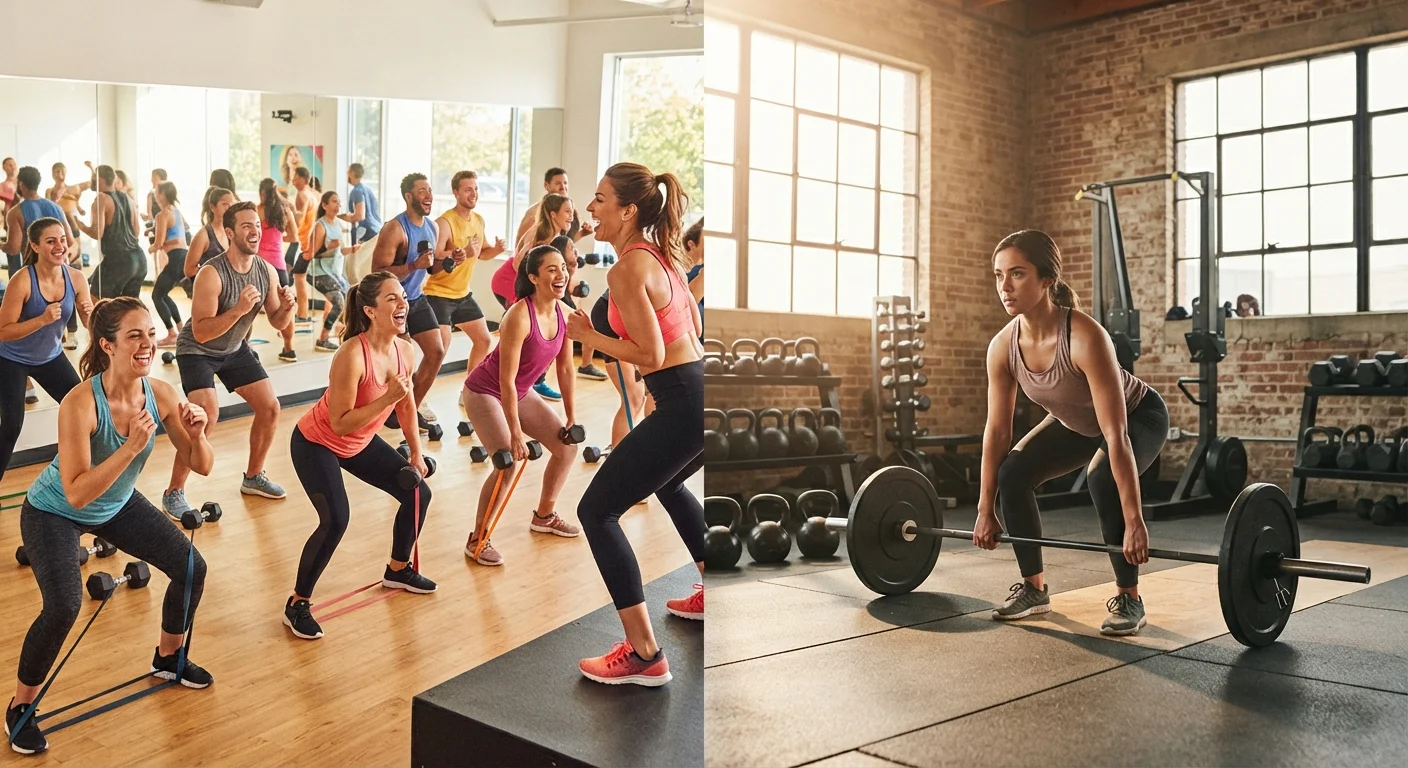
Group exercise classes - whether spin, yoga, HIIT, or water aerobics - tap into some powerful psychological levers. The most documented is social accountability: when other people expect to see you, you're more likely to show up. Research in exercise psychology suggests that working out alongside others can increase perceived enjoyment and effort compared to exercising alone.
There's also the benefit of structured programming. You don't need to plan what you're doing - an instructor does that. For beginners especially, this removes a major barrier. Group classes also introduce a sense of community that many people genuinely miss when they train alone, and that social connection can become a workout habit's most durable foundation.
The limitations are real, though. Class schedules may not flex around your life. The pace is set for the group, which may feel too fast or too slow for your fitness level. And depending on the format, costs can add up - particularly for boutique studios. People with joint concerns or specific health conditions may also find that group formats don't offer sufficient individual modification. If that describes you, low-impact exercise options may be worth exploring alongside or instead.
The Case for Solo Training
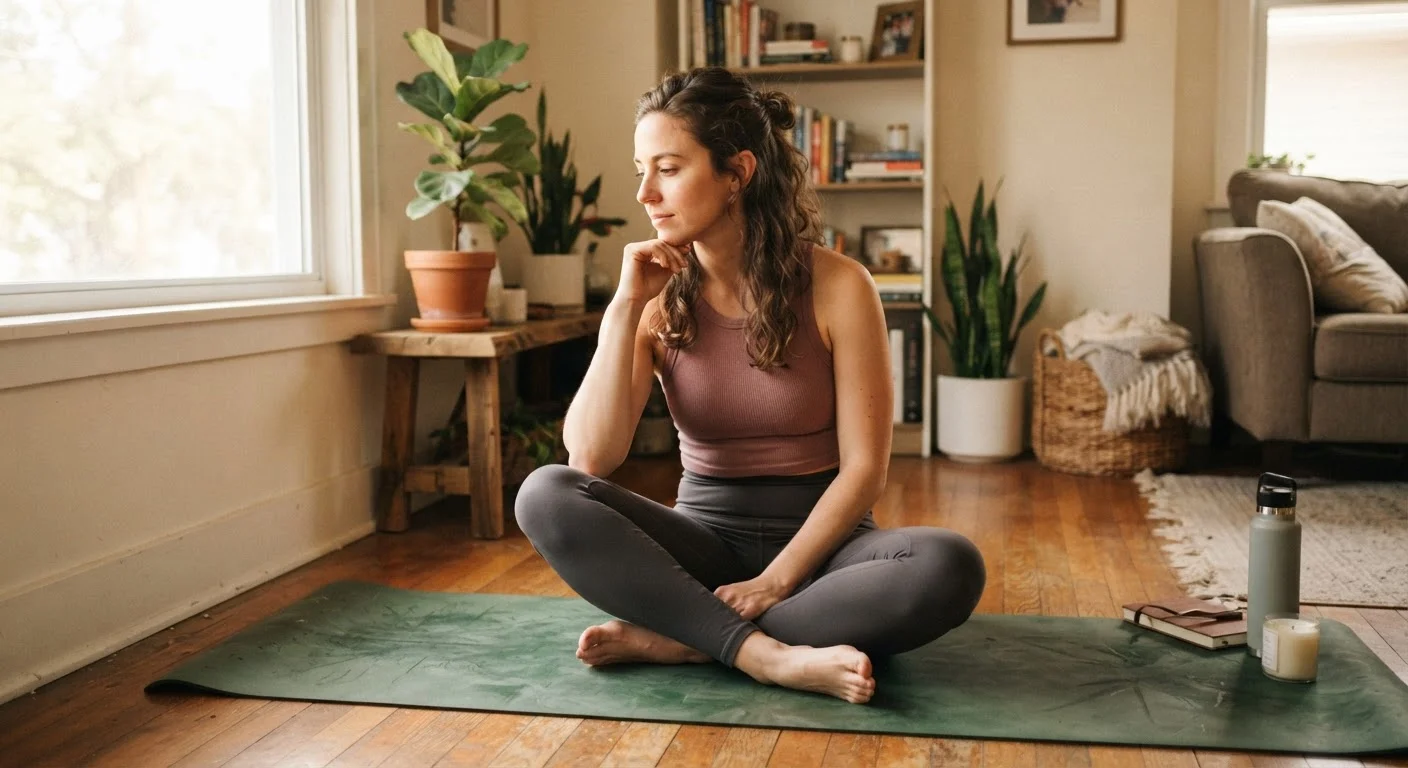
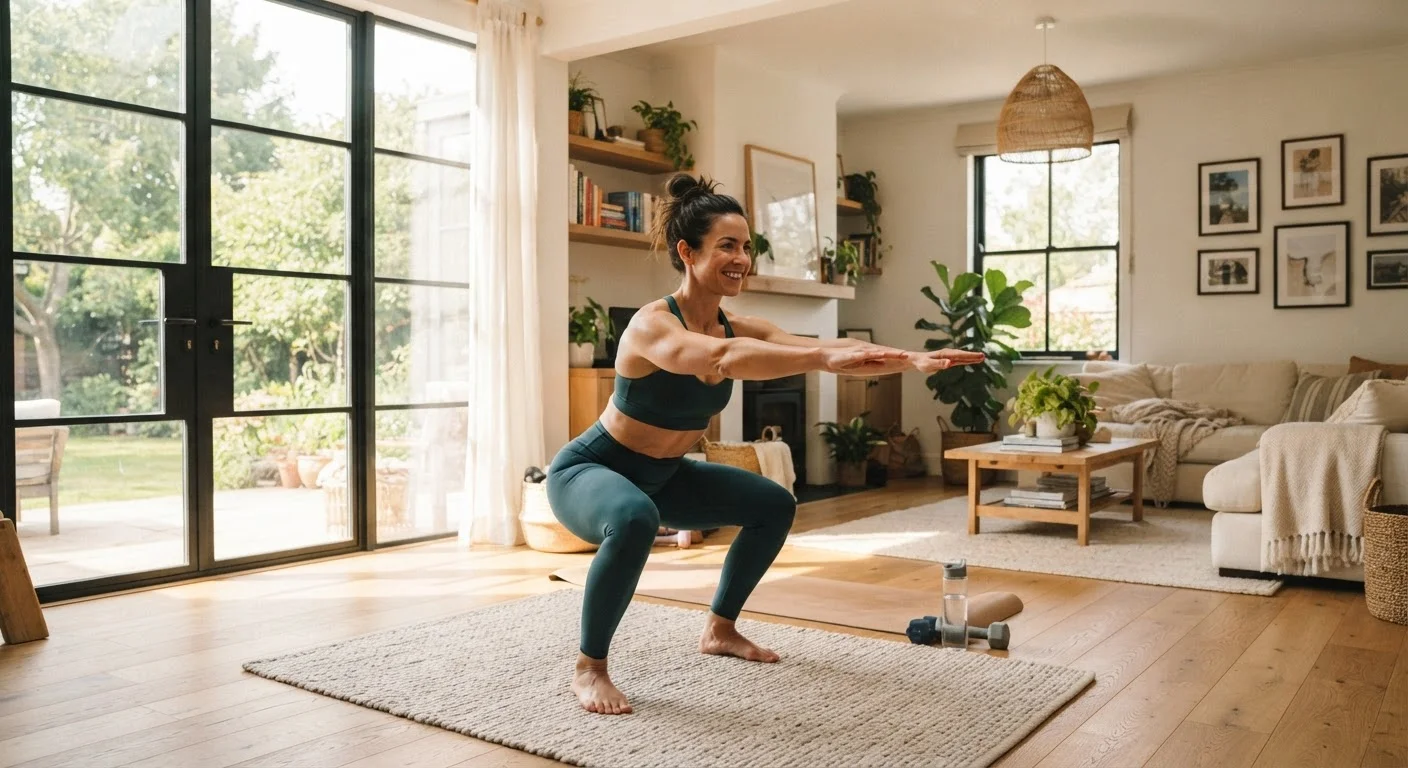
Solo training - whether at a gym, at home, or outdoors - puts you entirely in control. You decide the time, the exercises, the pace, and the duration. For people with unpredictable schedules, caregiving responsibilities, or a strong preference for autonomy, this flexibility is not just convenient - it's essential for consistency.
Training alone also allows for precise personalization. You can focus on the movements your body actually needs, progress at a rate that respects your current fitness level, and adapt on the fly if something feels off. If you're building from scratch, a home workout routine without equipment is a practical starting point that requires no gym membership.
Start Small to Build the Habit
If you're new to solo training, committing to very short sessions - even 15 to 20 minutes - can be more effective than ambitious plans you abandon after two weeks. Habit research consistently shows that frequency matters more than duration early on. Once showing up feels automatic, gradually increasing intensity or length becomes much easier.
The challenge with solo training is that the accountability structure lives entirely inside your own head. Without external commitments, it's easier to skip sessions - especially when life gets busy or motivation dips. Building reliable solo habits typically requires more intentional self-monitoring, such as tracking workouts or scheduling sessions like appointments.
What the Research Actually Suggests
Studies comparing group and solo exercise generally find that group settings can elevate motivation and enjoyment, particularly in the early weeks of a new routine. A widely cited study published in the Journal of the American Osteopathic Association found that participants in a group exercise program reported greater reductions in stress and improvements in quality of life compared to those who exercised alone or didn't exercise - though it's worth noting that study conditions vary and findings don't apply universally.
However, long-term adherence data is more mixed. Enjoyment of a workout format strongly predicts whether someone continues it. If group classes feel stressful, intimidating, or logistically burdensome, they can actually undermine consistency. For anyone integrating structured exercise into a broader fitness picture, it helps to understand what different types of exercise do for your body so you can make informed choices about format alongside content.
How to Choose - or Combine - Both Approaches
The most honest answer is that consistency beats format. The best workout is the one you'll reliably do over months and years, not the one that's theoretically optimal. That said, a few practical questions can help clarify your fit:
- Do you thrive on external accountability? Group fitness may give you the social pull you need to show up.
- Is schedule flexibility non-negotiable? Solo training is almost certainly more sustainable for you.
- Are you returning after time away? A realistic plan for returning to exercise matters more than the format you choose.
- Do you get bored or burned out easily? Mixing group and solo sessions weekly can sustain novelty while preserving flexibility.
Many people find that anchoring the week with one or two group sessions for motivation - and filling in with solo sessions for flexibility - gives them the best of both worlds. The environment you exercise in can also play a role; how your environment shapes your workout is worth considering as part of the overall picture.
This article provides general health information for educational purposes only and is not a substitute for personalized advice from a qualified healthcare or fitness professional. Please consult a professional before beginning or significantly changing any exercise program, particularly if you have an existing health condition.