
Movement Is Still Possible - And Worth It
Joint pain and limited mobility can make the idea of exercise feel daunting - or even off the table entirely. But physical inactivity often worsens joint stiffness, weakens the muscles that support joints, and can contribute to a cycle of discomfort that's hard to break. The good news is that low-impact movement - exercise that minimizes jarring, high-force stress on the joints - can help many people stay active, improve function, and feel better day to day.
Low-impact doesn't mean low-effort or low-reward. Research consistently supports its role in reducing inflammation, improving flexibility, building strength, and supporting mental health. Whether you're managing arthritis, recovering from an injury, dealing with chronic pain, or simply finding high-impact workouts harder on your body as you age, there are accessible options designed with your joints in mind.
This article is for general informational purposes only and is not a substitute for personalized medical advice. Before beginning any new exercise program, speak with your doctor or a licensed physical therapist - especially if you have a diagnosed condition or recent injury.
Swimming and Water Aerobics
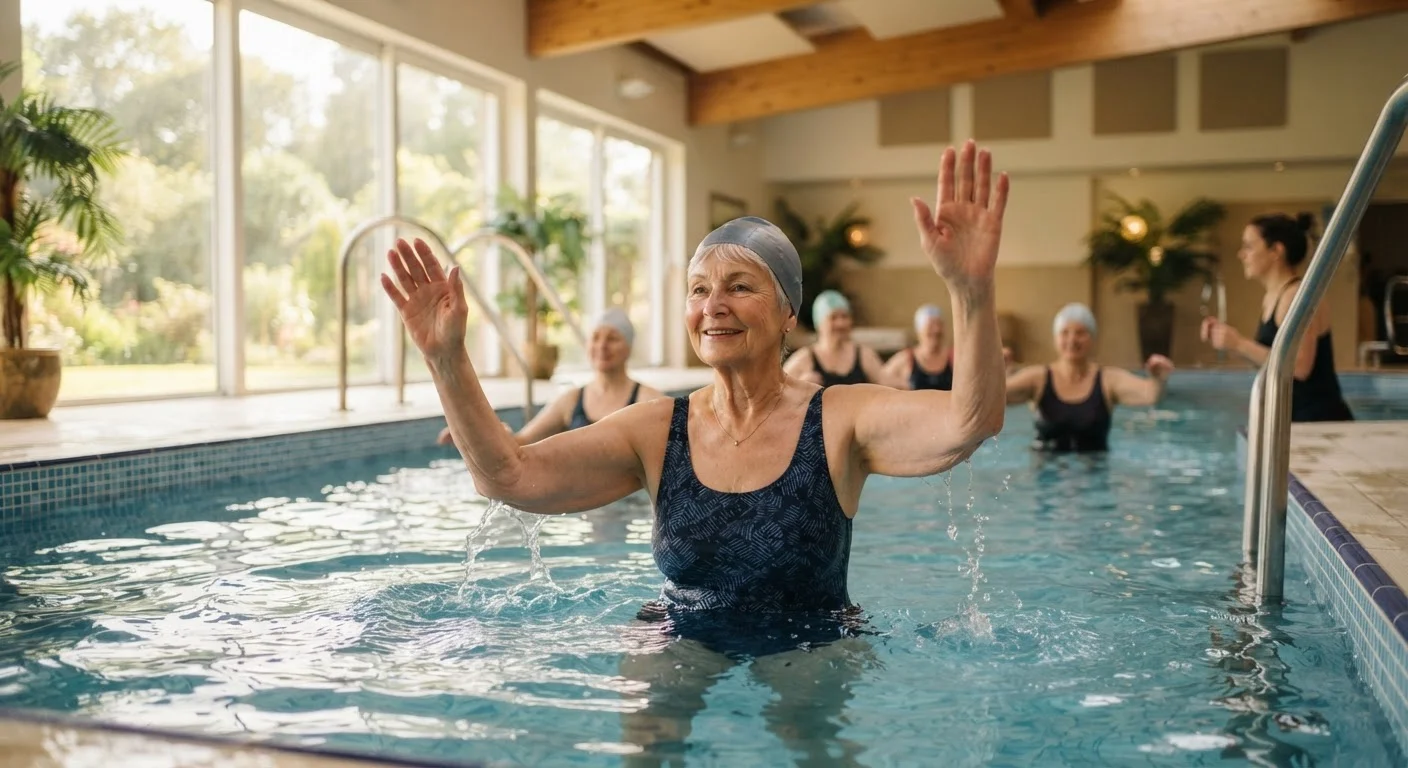
Water is one of the most joint-friendly environments for exercise. Buoyancy reduces the effective weight your joints must bear - by as much as 90% when submerged to the neck - which dramatically lowers impact forces. Swimming laps engages the whole body, building cardiovascular endurance and muscular strength simultaneously, while water aerobics classes offer structured, social movement at a comfortable pace.
Warm-water pools, sometimes found at therapy or community centers, can be especially helpful for people with arthritis, as heat tends to ease stiffness. If you're new to pool exercise, starting with a guided water aerobics class can help you learn proper form and avoid overexertion.
Water's buoyancy can significantly reduce joint load, making swimming one of the most body-friendly forms of exercise available.
Cycling (Stationary or Outdoor)
Cycling is a low-impact cardiovascular workout that keeps weight off the hips, knees, and ankles while still challenging the legs and heart. Stationary bikes are particularly accessible because you can control resistance, avoid balance concerns, and exercise regardless of weather. Recumbent bikes - where you sit in a reclined position with pedals out front - offer additional back and hip support for those who need it.
Seat height matters: when adjusted correctly, your knee should have a slight bend at the bottom of the pedal stroke, which reduces stress on the knee joint. A fitness professional or physical therapist can help you dial in proper positioning.
Stationary cycling delivers real cardiovascular benefits while keeping stress off the hips, knees, and ankles.
Chair-Based Exercises
For people with significant mobility limitations, chair exercises offer a safe and surprisingly versatile option. Seated movements can target the arms, legs, core, and even cardiovascular system - all without standing or bearing full body weight. Chair yoga and seated stretching routines improve flexibility and circulation, while resistance band exercises performed from a chair can build meaningful upper and lower body strength.
Chair workouts are easy to do at home with minimal equipment, which makes them accessible regardless of budget or proximity to a gym. Many community centers and senior programs also offer in-person chair exercise classes, adding a social dimension that can support long-term consistency.
Chair-based routines make strength and flexibility training genuinely accessible for people with significant mobility challenges.
Tai Chi
Tai chi is a centuries-old Chinese practice involving slow, flowing movements that improve balance, coordination, flexibility, and mind-body awareness. Because movements are controlled and weight-bearing stress is gradual, it is frequently recommended by physical therapists for people with arthritis, osteoporosis, and balance concerns. Research suggests tai chi may help reduce fall risk in older adults and ease joint pain associated with certain conditions - though individual results vary.
Classes are widely available at community centers, YMCAs, and online platforms. Beginners can start with shorter sessions and simplified movement sequences, making the learning curve manageable even for those new to structured exercise.
Tai chi's slow, controlled movements can improve balance and ease joint discomfort without stressing the musculoskeletal system.
Gentle Yoga
Yoga emphasizes stretching, controlled breathing, and body awareness - all of which can benefit people dealing with pain or restricted movement. Restorative and gentle yoga styles use props like blocks, straps, and bolsters to support the body in poses, reducing the demand placed on joints. Over time, consistent practice may help improve range of motion, reduce muscle tension, and support stress management, which itself can influence how pain is perceived.
Look for classes specifically labeled as gentle, restorative, or therapeutic. Instructors experienced in working with people who have physical limitations can offer meaningful modifications. As with any new practice, communicate your needs to the teacher before class begins. Common exercise myths - like the idea that you must feel pain to benefit - are worth revisiting before jumping in.
Restorative yoga, supported by props and thoughtful modifications, can build flexibility and ease tension without straining joints.
Walking
Walking remains one of the most accessible and well-researched forms of physical activity. It's weight-bearing - which supports bone density - but far less jarring than running. For many people with mild to moderate joint pain, a consistent walking routine helps maintain function and can even reduce discomfort over time by strengthening surrounding muscles and supporting circulation.
The key is to start at a comfortable pace and distance, wear supportive footwear, and choose surfaces that work for your joints (softer surfaces like grass or packed trails tend to absorb more impact than concrete). Trekking poles can also add stability and reduce the load on knees during walks on uneven terrain. For a deeper comparison of how walking stacks up against more intense movement, see walking vs. running for a balanced look at both.
A consistent, pace-appropriate walking routine can maintain joint function and strengthen supportive muscles over time.
Finding What Works for Your Life
The most effective exercise routine is one you can sustain. Joint-friendly options span a wide range - from solo home workouts to group aquatics classes - so there's real room to find something that fits your schedule, budget, and preferences. If you're curious about how shorter activity sessions can still make a difference, our guide on movement snacks and brief exercise bursts shows how small bouts of movement add up meaningfully over time.
You might also find that social support shapes your consistency. Group fitness versus solo training each carry real trade-offs worth considering, particularly if motivation has been a challenge. And if you've wondered how walking fits in compared to more vigorous options, walking vs. running breaks down joint stress, intensity, and sustainability so you can make a more informed choice.
Progress with low-impact exercise tends to be gradual - and that's entirely appropriate. Small, consistent steps are far more sustainable than pushing through pain. Listen to your body, adapt as needed, and work with a qualified professional to build a plan that supports your specific needs and goals.
Start Slowly and Build Gradually
If you're returning to exercise after a period of inactivity or pain, beginning with shorter, easier sessions is wise - even 10 minutes daily can be meaningful. Increase duration or intensity gradually, and never push through sharp or worsening pain. A physical therapist can help you create a progression plan tailored to your specific condition and goals.
This article is for general informational purposes only and does not constitute medical advice. Always consult a qualified healthcare provider before starting or modifying an exercise program, particularly if you have joint conditions, chronic pain, or other health concerns.