
What a Calorie Actually Is
Strip away the diet culture noise and a calorie is simply a unit of measurement - specifically, a measure of energy. When you eat food, your digestive system breaks it down and releases that stored energy so your body can use it. Every heartbeat, every thought, every step you take draws on this energy supply.
The calorie counts printed on food packaging are technically kilocalories (kcal), each representing the energy needed to raise the temperature of one kilogram of water by one degree Celsius. That scientific detail rarely matters in everyday life, but it helps explain why nutrition labels use numbers in the hundreds rather than the hundreds of thousands.
Understanding how energy enters and exits your body is a genuinely useful foundation for making food decisions - and it's also where the simple version of the story starts to get more interesting. If you want to go deeper on what's behind those numbers on packaging, our guide on reading a nutrition label walks through each section clearly.
~60-70%
Of daily calories burned at rest (BMR)
Basal metabolic rate - energy used for basic biological functions - typically makes up the largest portion of total daily energy expenditure, according to established exercise physiology research.
20-30%
Higher thermic effect of protein vs. carbs or fat
Research published in nutrition metabolism journals consistently shows that the body expends more energy digesting protein than it does processing equivalent calories from carbohydrates or fats.
Up to 20%
Margin of error on food label calorie counts
The U.S. FDA allows up to a 20% variance between the calorie count listed on a nutrition label and the actual calorie content of a packaged food.
Where Your Energy Actually Goes
Most people assume that exercise is where the majority of calories get burned. In reality, physical activity typically accounts for only about 15-30% of your total daily energy use. The largest share - often 60-70% - goes toward your basal metabolic rate (BMR): the energy your body needs just to keep you alive while you're doing nothing at all. Breathing, circulating blood, repairing cells, and regulating temperature all have an energy cost.
A third component, called the thermic effect of food (TEF), accounts for the energy spent digesting, absorbing, and metabolizing what you eat. Protein has a notably higher thermic effect than fat or carbohydrates, meaning your body burns more energy processing a protein-rich meal than an equivalent-calorie one that's mostly fat.
This breakdown matters because it shifts the picture of energy balance considerably. Two people consuming the same number of calories can have very different outcomes depending on their muscle mass, hormonal health, sleep quality, and even gut microbiome composition - all factors that influence how efficiently the body extracts and uses energy.
Why 'Calories In, Calories Out' Is Incomplete
The basic principle - consume fewer calories than you burn and you'll lose weight - is grounded in physics and is broadly true. But treating it as the whole story overlooks a lot of important biology.
First, not all calories behave the same way once they're inside your body. Consider 200 calories of almonds versus 200 calories of a sweetened sports drink. The almonds deliver protein, fiber, and healthy fats that slow digestion and sustain fullness. The drink delivers simple sugars that spike blood glucose quickly and leave you hungry again sooner. Same calorie count, very different metabolic effects.
Second, your body actively adapts to changes in calorie intake. When food is significantly restricted over time, the body can lower its metabolic rate - a phenomenon sometimes called metabolic adaptation - making weight management more complex than a straightforward math equation.
Third, hunger and eating behavior are governed heavily by hormones like leptin, ghrelin, and insulin - not willpower alone. Sleep deprivation, chronic stress, and ultra-processed food consumption can all disrupt these hormonal signals in ways that influence how much you eat, independent of conscious choices. Our article on common nutrition myths explores several of these misunderstood mechanisms in more detail.
Build Meals Around Satiety, Not Just Calories
Combining a lean protein source, a fiber-rich vegetable, and a moderate portion of whole grains in a single meal addresses hunger on multiple levels simultaneously. This approach tends to reduce the urge to snack excessively between meals without requiring any calorie math. Small, consistent shifts in meal composition often have a more lasting effect than drastic restriction.
Thinking About Food Quality, Not Just Quantity
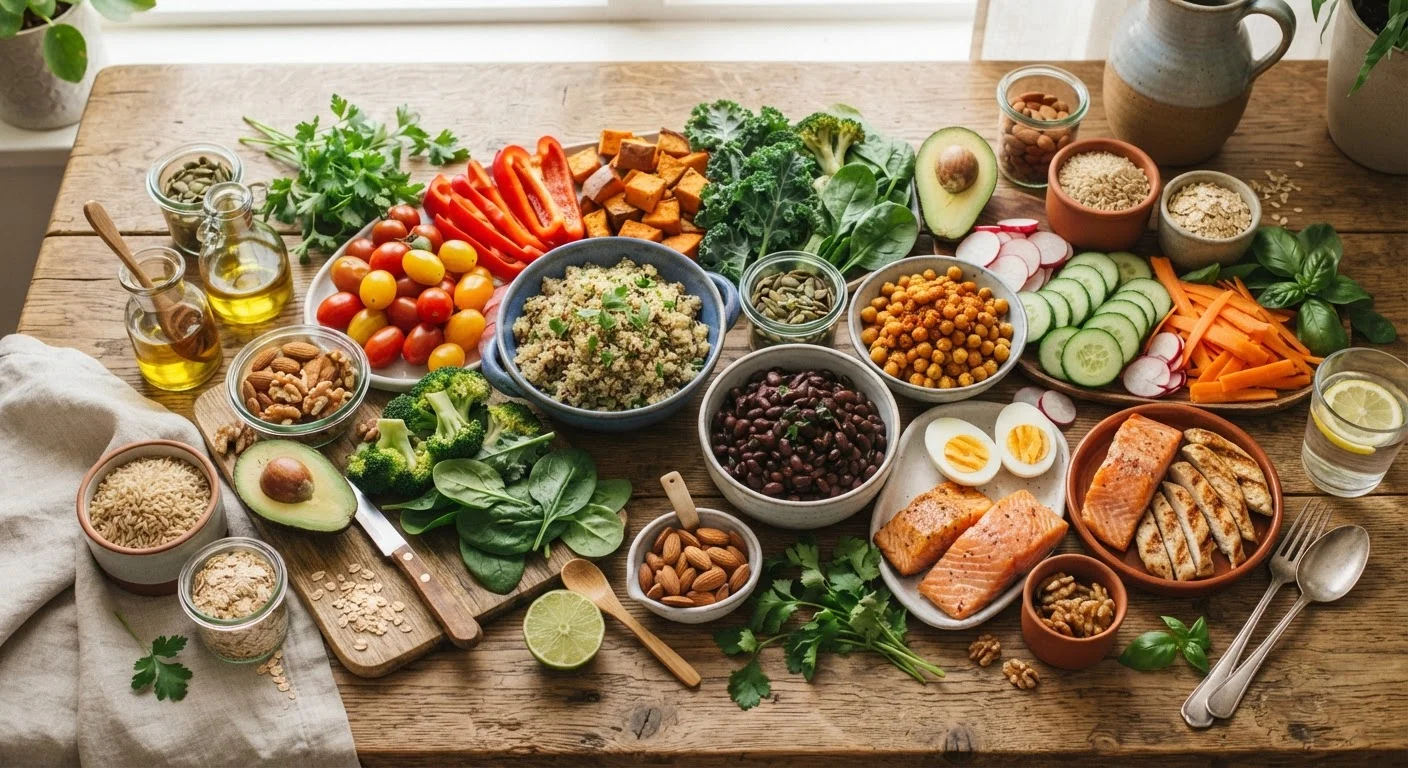
A more useful frame than pure calorie counting is considering what your calories are doing for you. Nutrient-dense foods - vegetables, legumes, whole grains, lean proteins, nuts, and fruit - deliver vitamins, minerals, fiber, and phytonutrients alongside their calories. Ultra-processed foods often deliver similar or higher calories with far fewer of those accompanying benefits.
Protein and dietary fiber are particularly worth paying attention to. Both are associated with greater satiety (the feeling of fullness), which can naturally moderate how much you eat without requiring strict tracking. Understanding what carbs, protein, and fat actually do in your body makes it easier to build meals that genuinely sustain your energy throughout the day.
It's also worth knowing that post-meal energy dips - that heavy, foggy feeling after lunch - often have a nutritional explanation rooted in blood sugar dynamics and meal composition. If you experience these regularly, understanding what drives energy crashes after meals can help you make targeted adjustments.
None of this means calorie awareness is useless - for some people, tracking provides clarity and accountability. But the most sustainable approach to eating well tends to involve learning what foods make you feel energized and satisfied, rather than treating every meal as an arithmetic problem.
This article is for general informational and educational purposes only and is not a substitute for professional medical or nutrition advice. If you have questions about your diet, weight, or health, please consult a qualified healthcare provider or registered dietitian.