Why Your Space Affects Your State of Mind
We tend to think of stress as something that lives inside us - a product of deadlines, relationships, or racing thoughts. But research in environmental psychology consistently shows that the physical spaces we occupy play a quiet, ongoing role in shaping our nervous system's baseline. Noise levels, lighting quality, clutter density, and even scent can all nudge the brain toward alertness and tension or toward calm and focus.
The good news is you don't need to renovate your home or spend significantly to make meaningful changes. Many of the most effective environmental adjustments are small, reversible, and easy to implement today. These aren't substitutes for professional support when it's needed - they're practical micro-tools for everyday well-being. If you're also working on habits like an evening wind-down routine or emotional regulation practices, thoughtful environmental changes can reinforce all of it.
Reduce visual clutter in one key area
Clutter isn't just an aesthetic problem - it competes for your attention. Studies in neuroscience suggest that a visually busy environment keeps the brain in a low-grade state of alertness, making it harder to relax. You don't need to minimise your entire home. Instead, identify a single surface or corner you use often - a desk, a nightstand, a kitchen counter - and clear it intentionally. Keep only what you genuinely use daily. That one organised spot can become a visual anchor of calm.
A single cleared surface can act as a visual anchor your brain returns to for calm.
Adjust your lighting to match the time of day
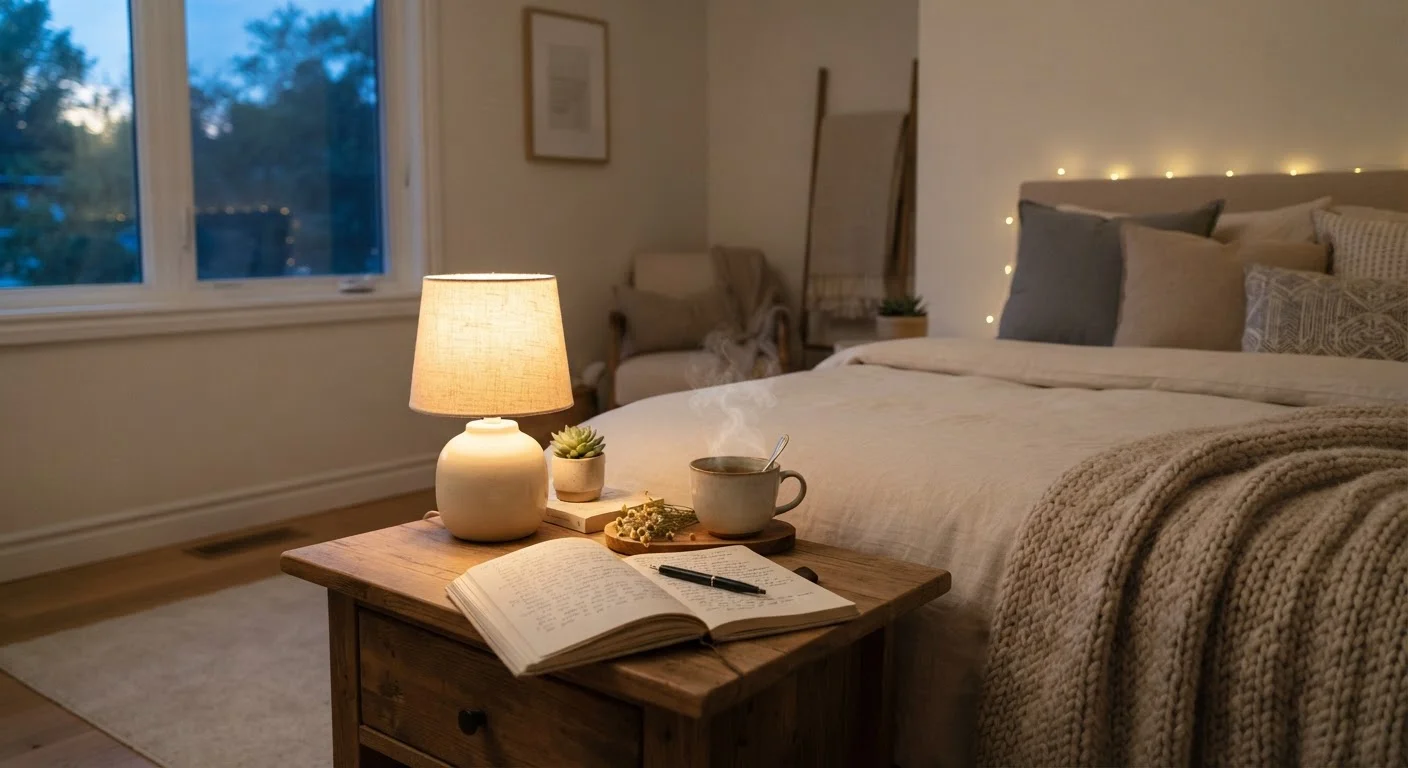
Light is one of the most powerful environmental signals your body receives. Bright, blue-toned light supports alertness and is helpful in the morning; warmer, dimmer light in the evening helps signal to your brain that the day is winding down. If your workspace or living area uses harsh overhead lighting all day and evening, consider adding a warm-toned lamp for later hours. Even this one shift can help your nervous system begin to downshift before bed, supporting better sleep and lower evening anxiety.
Switching to warm, dim light in the evening can help your nervous system begin winding down naturally.
Bring a small amount of nature indoors
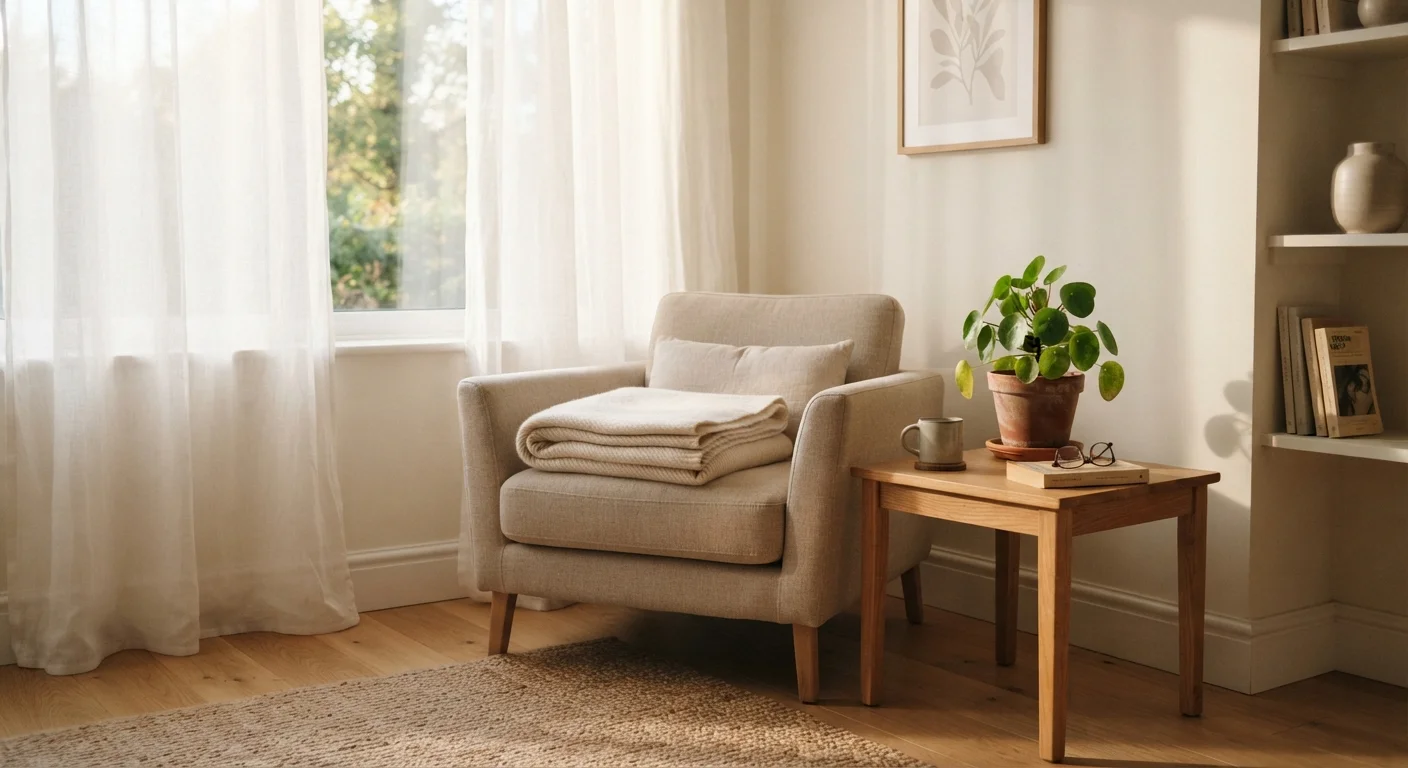
Decades of environmental research support the idea that natural elements - plants, natural textures, views of greenery - have a measurable calming effect on people. The concept, sometimes called biophilia, reflects our evolutionary connection to natural environments. You don't need a garden. A single low-maintenance houseplant, a bowl of smooth stones, or positioning a chair near a window with a view of trees can nudge your nervous system toward a more relaxed baseline throughout the day.
Even one small houseplant can connect your nervous system to nature's calming influence.
Address background noise deliberately
Uncontrolled noise - traffic, appliances, nearby conversations - is a surprisingly significant stressor that many people simply tune out rather than address. Over time, however, constant low-level noise keeps your body in a mild stress state. Simple interventions include rearranging your primary work or relaxation area away from noise sources, using a white-noise machine or a fan to mask irregular sounds, or keeping a pair of earplugs or noise-dampening headphones within reach. Taking control of your sonic environment is a low-effort, high-impact shift.
Taking control of your acoustic environment is one of the most overlooked stress-reduction tools available.
Create a dedicated space for decompression
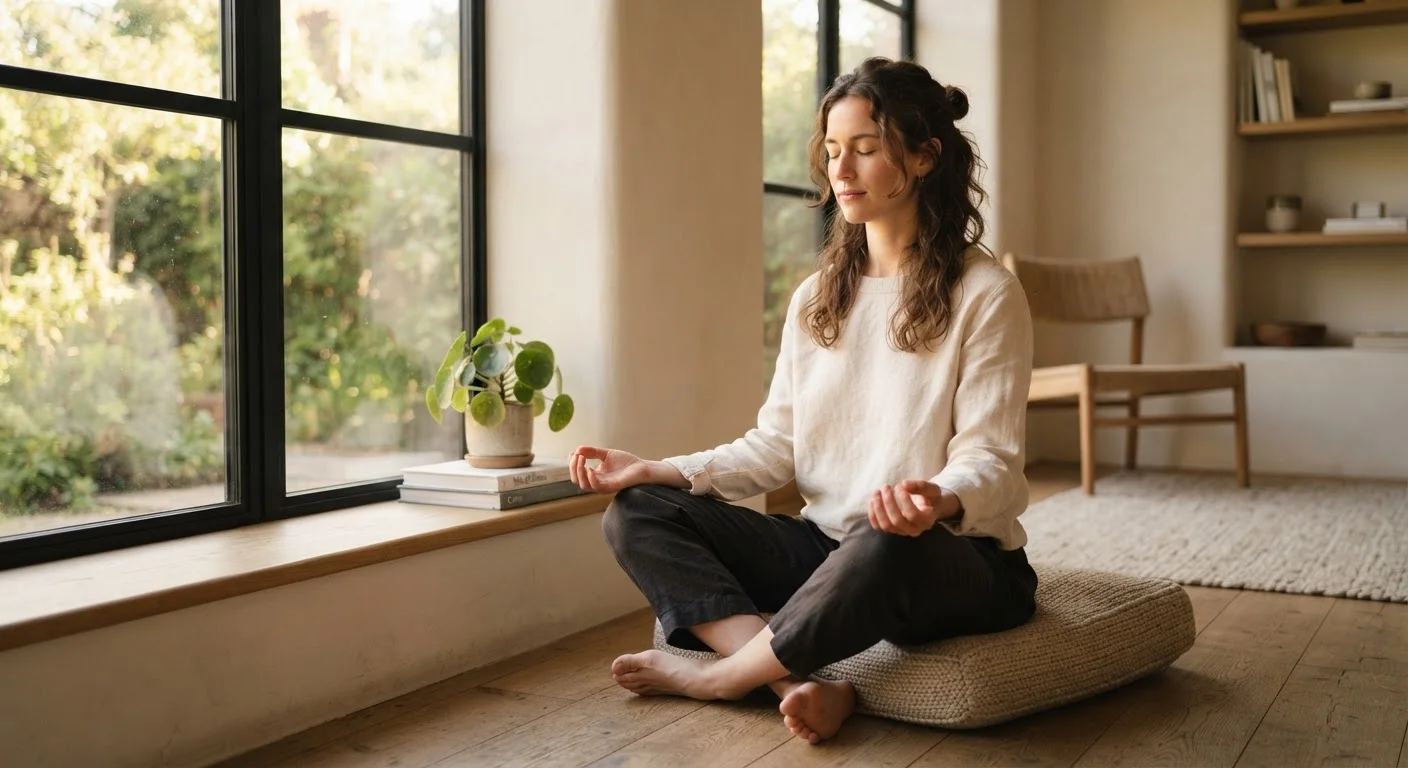
When every corner of your home doubles as a workspace, relaxation area, and entertainment zone, your brain never fully receives the signal that it's time to rest. If possible, designate even a small, specific spot - a particular chair, a corner of the bedroom, a spot on the porch - solely for calming activities like reading, breathing exercises, or quiet reflection. Over time, your nervous system begins to associate that space with rest. Pairing this with practices like breathwork or meditation can deepen the effect.
A dedicated decompression corner trains your brain to associate that space with genuine rest.
Use scent as a subtle mood cue
The olfactory system - our sense of smell - has a direct pathway to the brain's limbic system, which governs emotion and memory. This makes scent a surprisingly fast-acting environmental lever. Certain aromas, such as lavender and chamomile, have been studied for their association with relaxation responses, though individual reactions vary. A simple diffuser, a scented candle used safely and briefly, or even an herbal tea can introduce a calming sensory cue into your space. The key is consistency: using the same scent during calm moments helps your brain learn to associate it with rest.
Scent reaches the brain's emotional centers faster than almost any other sensory input.
Establish a visual 'off switch' for work
For people who work from home, one of the most persistent stress contributors is the constant visual presence of work. A laptop left open on the kitchen table, files stacked near the couch, or a home office with no door keeps work mentally present even during off-hours. At the end of your workday, physically close your laptop, put away files, or even drape a cloth over your desk. Creating a visual break from work cues your brain that a boundary has been drawn - a small act with a meaningful psychological payoff.
Physically closing or covering work materials at day's end signals your brain that it's time to shift modes.
Making It Work in Real Life
You don't need to overhaul every room at once. Pick one area where stress tends to spike - maybe your home office, your bedroom, or wherever you unwind after work - and apply one or two changes from this list. Notice how the space feels after a week. Small wins build momentum.
Start With One Change, Not Seven
It can be tempting to tackle every item on this list at once, but that approach often leads to overwhelm and abandonment. Choose the single change that feels most relevant to where you experience stress, implement it this week, and give yourself time to notice its effect. Sustainable improvement tends to come from layering small wins rather than sweeping overhauls.
Environmental shifts pair especially well with intentional daily routines. Morning habits that set an emotional tone and a consistent approach to sleep can amplify the calming effect of a thoughtfully arranged space. Together, they create an environment - inside and out - that supports steadier moods day to day.
This article is for general informational and educational purposes only and is not a substitute for professional mental health advice, diagnosis, or treatment. If you are experiencing significant stress, anxiety, or mental health concerns, please consult a qualified healthcare professional.