How Each Practice Actually Works
Meditation and breathwork are often grouped together under the umbrella of "mindfulness," but they operate through meaningfully different mechanisms - and understanding that distinction helps you choose wisely.
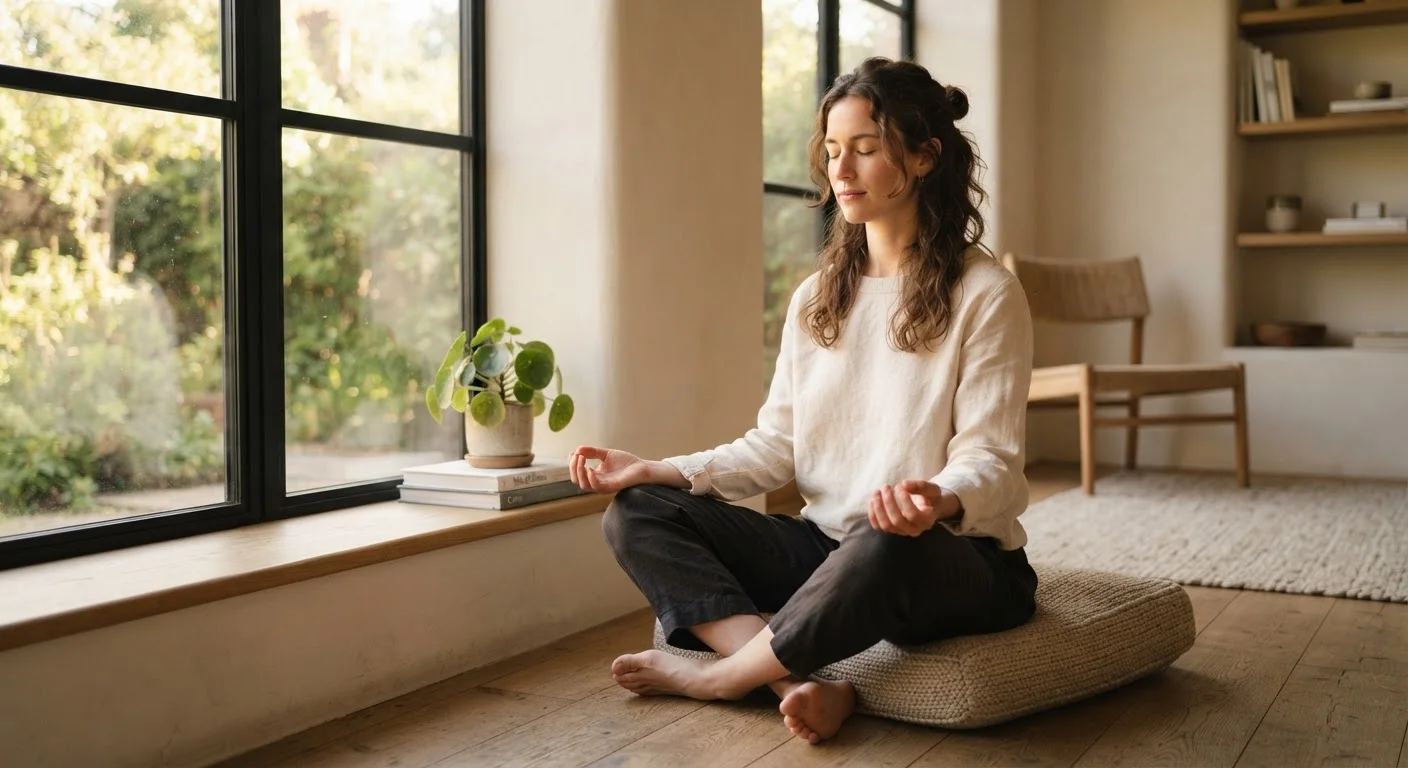
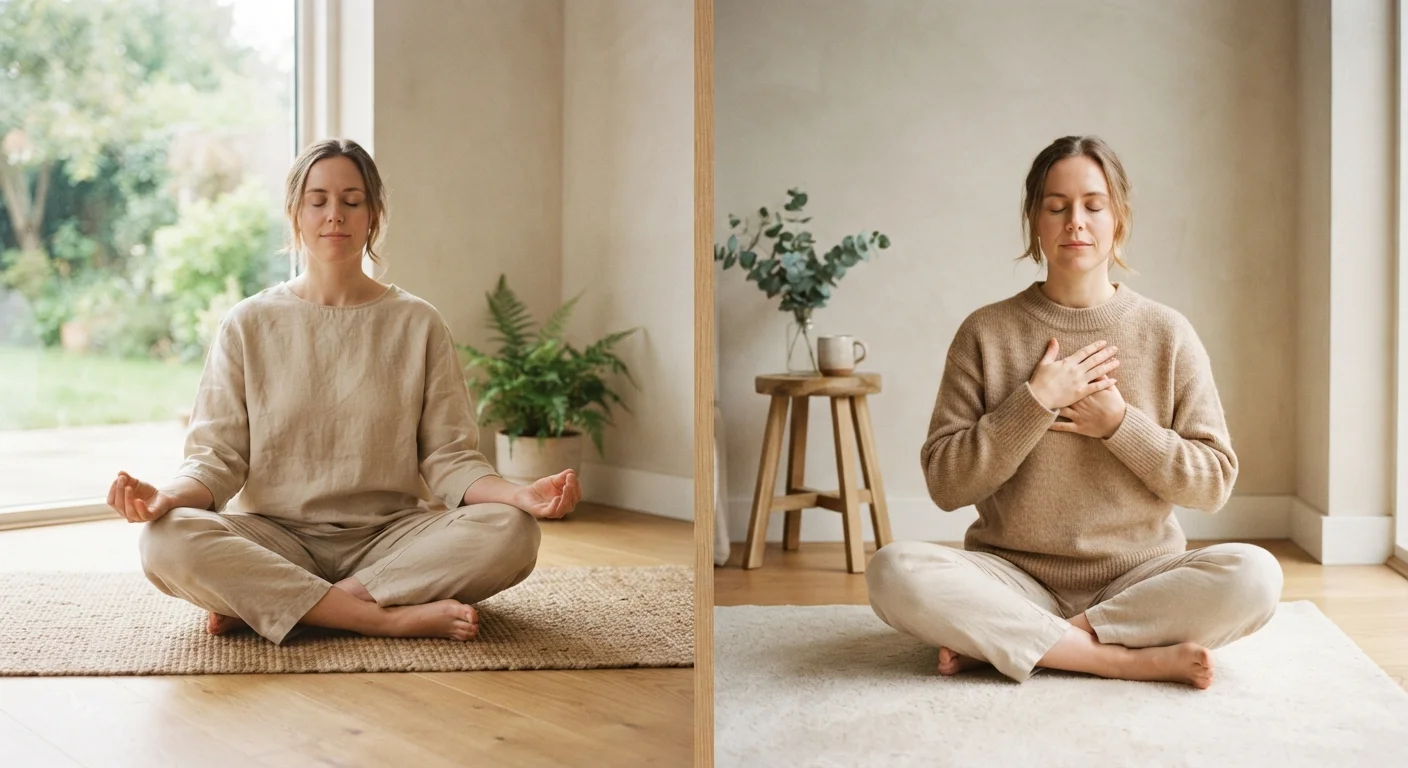
Meditation is a broad family of mental training practices. Most forms involve deliberately directing and sustaining attention - on a word, sensation, image, or simply the present moment - and gently returning focus whenever the mind wanders. Over time, this trains what researchers call attentional control: the ability to notice what your mind is doing and choose where it goes. The calming effect is largely indirect - you aren't forcing relaxation, you're building the mental capacity to respond to stress rather than react to it.
Breathwork takes a more physiological route. By consciously changing your breathing rate and pattern - slowing the exhale, pausing between breaths, breathing into the belly - you directly influence the autonomic nervous system. Slow, extended exhalation, in particular, activates the vagus nerve and shifts the body toward a parasympathetic state, which is associated with lower heart rate and reduced cortisol. The effect is more immediate and body-centered than most meditation styles.
For readers curious about how both fit into a broader self-care picture, this look at common self-care myths is a useful reality check on what the research actually supports.
| Criterion | Meditation | Breathwork |
|---|---|---|
| Primary mechanism | Attentional training | Nervous system regulation via breath |
| Speed of effect | Gradual (weeks to months) | Noticeable within minutes |
| Learning curve | Moderate - tolerating mind-wandering | Low - structured, step-by-step techniques |
| Typical session length | 5-20 minutes | 2-10 minutes |
| Best moment to use | Daily routine anchor | In-the-moment stress response |
| Equipment needed | None | None |
| Research support | Extensive, decades of studies | Growing, especially for anxiety and HRV |
Time, Effort, and Getting Started
One of the most common barriers to both practices is a sense that you're doing it wrong. Here's the reassuring truth: neither requires perfection - or even long sessions - to be useful.
Meditation is most effective when practiced consistently rather than intensively. Research on mindfulness-based stress reduction (MBSR) programs suggests that regular short sessions - even five to ten minutes daily - can be more beneficial than occasional longer ones. The challenge for beginners is tolerating the discomfort of a wandering mind without quitting. That wandering is not failure; it's the practice.
Breathwork has a lower frustration threshold for many people because it's task-oriented. Techniques like box breathing (inhaling for four counts, holding for four, exhaling for four, holding for four) or the 4-7-8 method give your mind something structured to follow. Sessions can be as short as two to three minutes and still produce measurable relaxation responses.
~8 weeks
Time to measurable stress reduction in MBSR programs
Mindfulness-Based Stress Reduction (MBSR) research, including work associated with the University of Massachusetts Medical School, consistently shows benefits emerging after approximately eight weeks of regular practice.
~2-4 min
Time for slow breathing to activate parasympathetic response
Studies published in journals including Frontiers in Human Neuroscience indicate that slow-paced breathing (around 5-6 breaths per minute) can shift autonomic balance within just a few minutes.
~36%
Adults in the U.S. who report practicing meditation
According to the National Health Interview Survey data tracked by the National Center for Health Statistics, meditation use among U.S. adults has risen substantially over the past decade.
Both practices become more accessible when anchored to an existing routine - after your morning coffee, during a lunch break, or as part of a wind-down before bed. For practical ideas on building that kind of pre-sleep structure, see how to build an evening wind-down routine.
Who Tends to Benefit Most - and Important Caveats
Neither practice is universally superior, and individual response varies considerably. That said, some patterns are worth knowing.
People who experience anxiety as physical - a racing heart, tight chest, shallow breathing - often find breathwork more immediately accessible because it addresses the body first. People whose stress is more cognitive - rumination, worry spirals, difficulty switching off - may find that a meditation style focused on observing thoughts (sometimes called open monitoring) is particularly helpful over time.
It's also worth noting that some individuals, particularly those with a trauma history or certain anxiety disorders, may find extended breath-holding techniques or intensive breathing exercises uncomfortable or activating. If that's your experience, shorter, gentler approaches and guidance from a qualified mental health professional are strongly advisable. This article provides general information only and is not a substitute for personalized clinical guidance.
For a broader toolkit of day-to-day emotional regulation strategies that complement both practices, everyday practices that support emotional regulation offers evidence-informed options worth exploring.
A Note on Combining Both Practices
Meditation and breathwork are not mutually exclusive - in fact, many structured mindfulness programs incorporate breathwork as a foundation before moving into open awareness meditation. Starting a session with two to three minutes of slow, conscious breathing can reduce initial restlessness and make it easier to settle into a meditation practice. If your schedule allows only one, choose based on your immediate goal: quick relief or long-term habit-building.
This article is for general informational and educational purposes only and is not medical or mental health advice. If you are managing a diagnosed condition or experiencing significant distress, please consult a qualified healthcare professional before beginning any new practice.